
 Emergency plumbing
 Drain diagnostics
 Hydro jetting
 Sewer line repair
 Leaks & water mains
 Mechanical service
 Storm & flood response
 Underground & excavation
 Homeowners
 Strata councils
 Property managers
 Renovations & restoration

Cleaning out a parkade oil interceptor.
An oil interceptor catches oil, fuel and grit from a parkade’s floor drains before it reaches the sewer. We brought in a pump truck to empty and clean it, then checked the baffles and the pump.
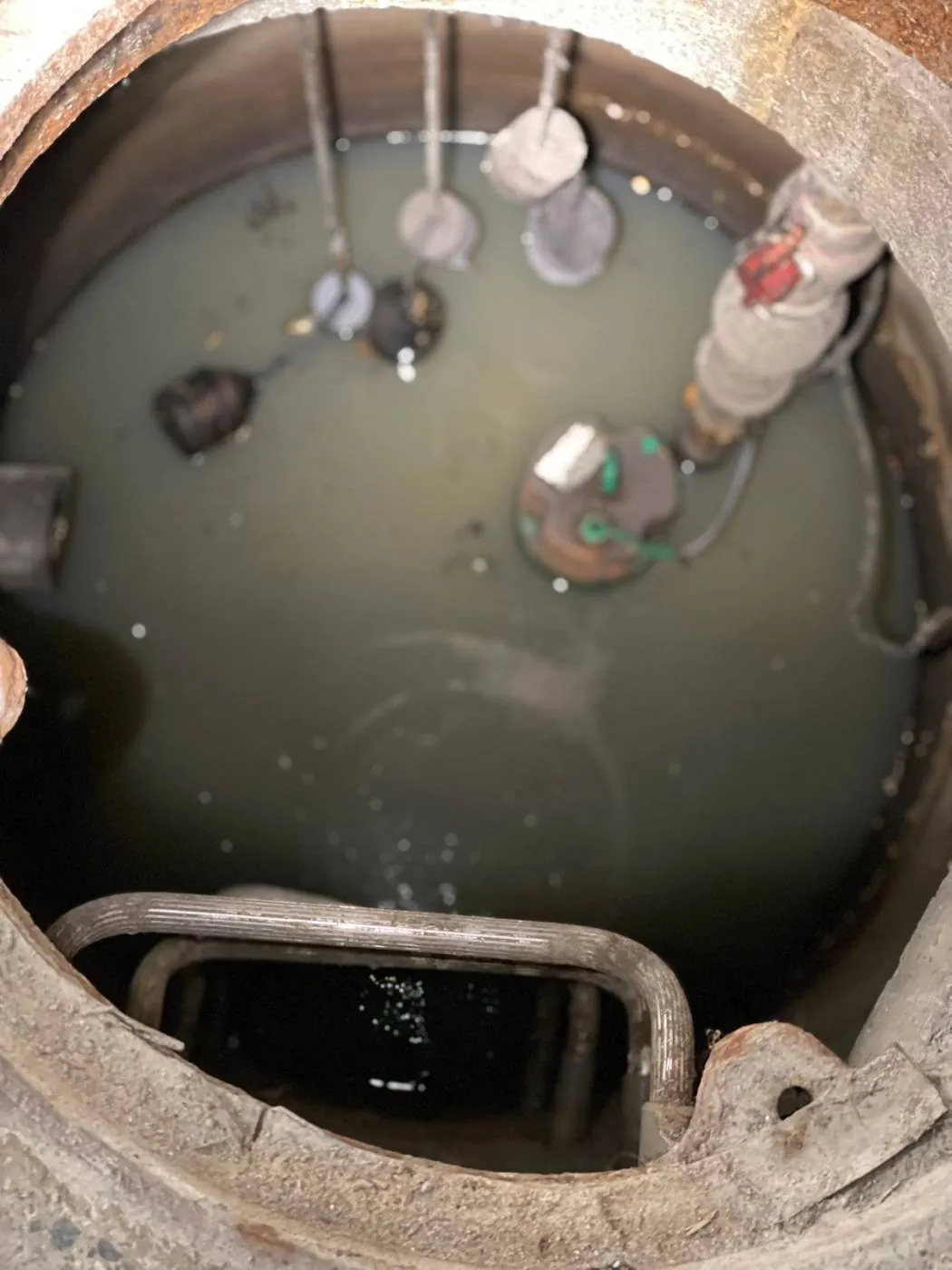
Interceptors fill up slowly, then cause problems all at once.
Rain, snowmelt and washing bring oil, fuel and grit off cars and into a parkade’s drains. The interceptor holds it back so it doesn’t go into the city sewer. Over time the sediment builds up, takes up space, and can block the outlet or foul the pump.
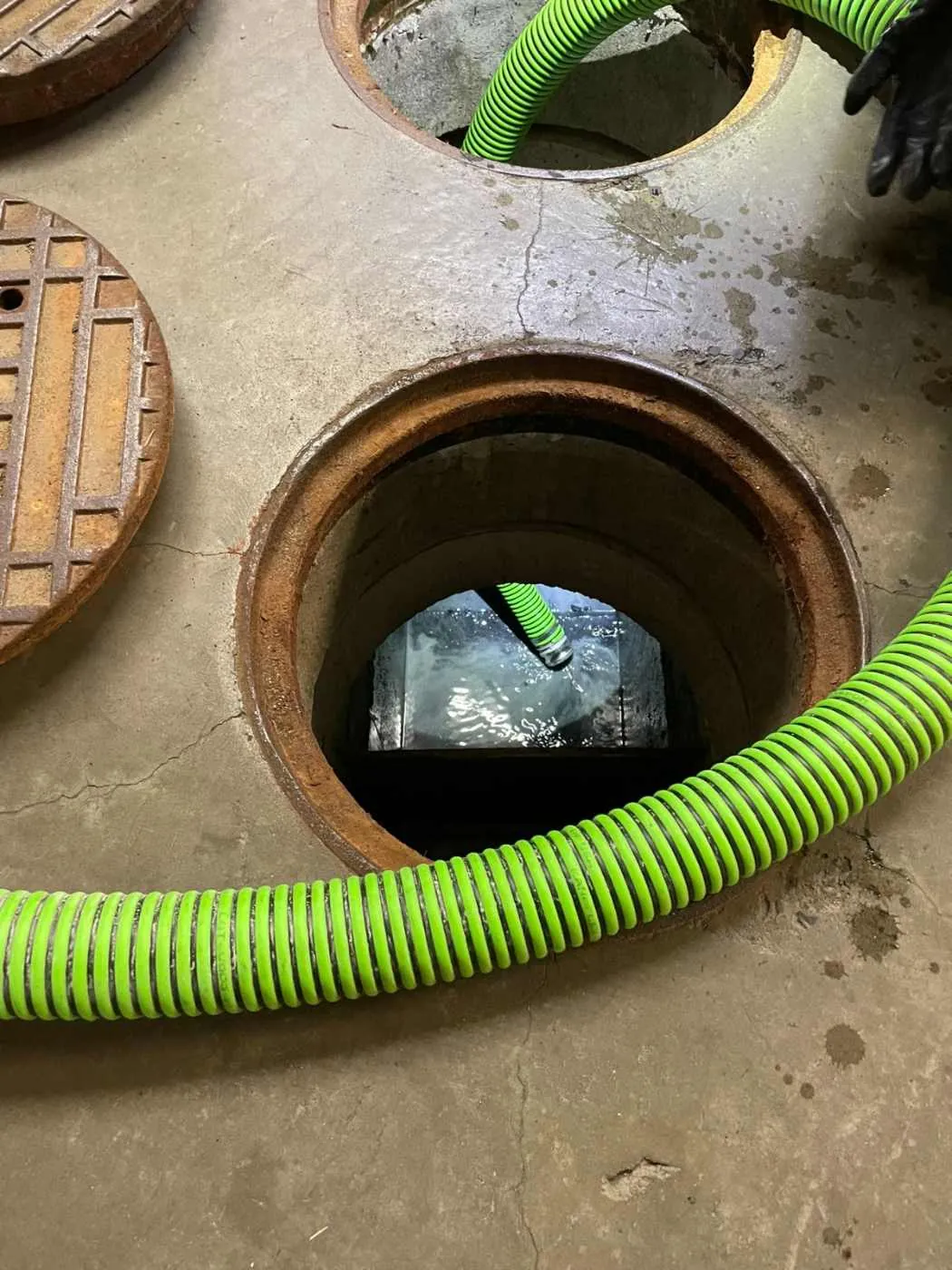
Cleaning it out on a schedule keeps the drains working and keeps the building in line with city sewer rules.
Vacuum it out, then check what’s inside.
With a pump truck, we vacuumed the inside of both the interceptor and the pump chamber to remove the standing water, sediment and debris.
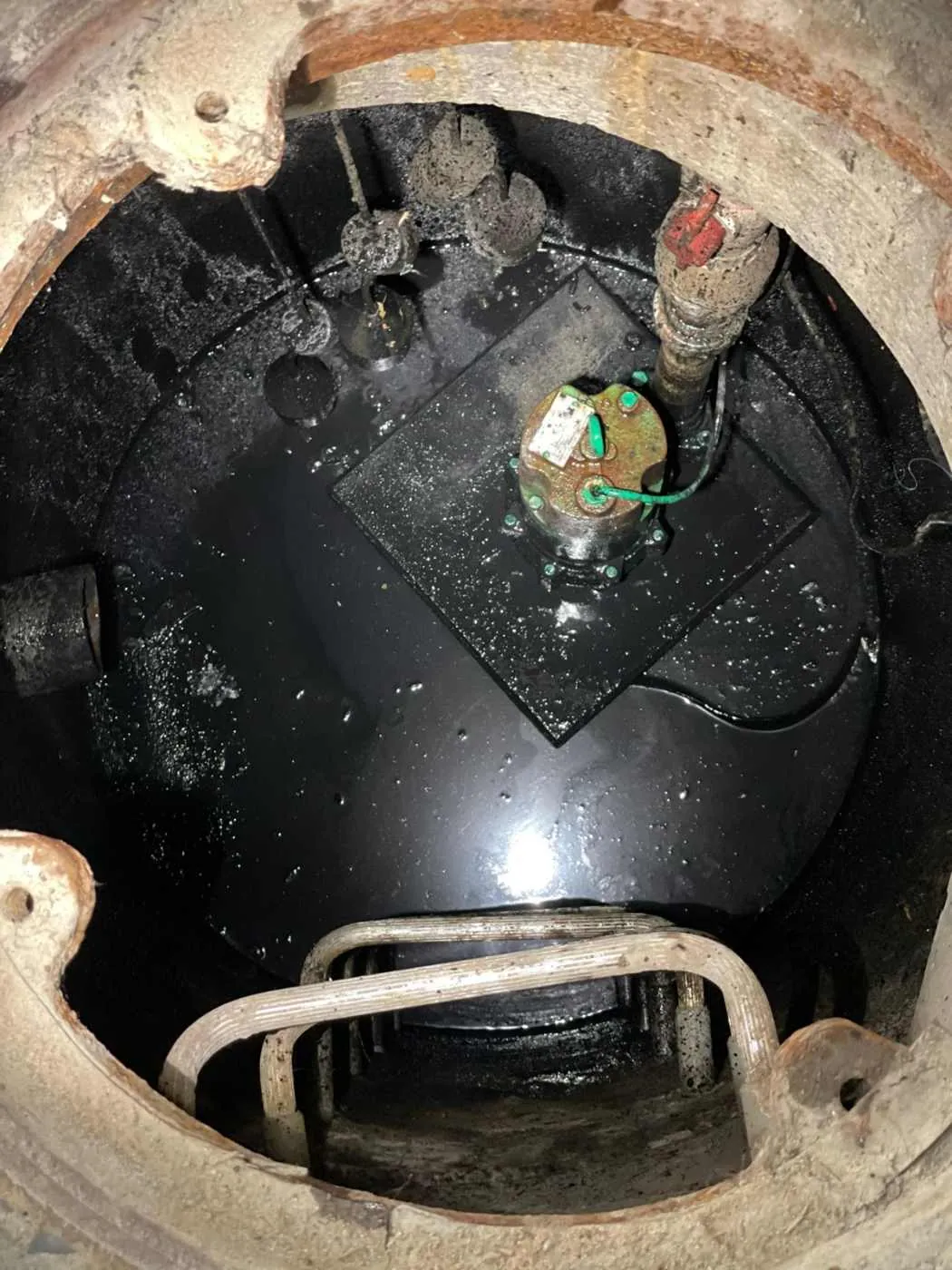
Once it was empty, we checked the baffles that separate the oil from the water and they were still in good shape. We tested the pump lift and it was working properly, then cleaned up the area.
A three-hour visit.
Most of the work is done by the truck. The value is in checking the parts while the tank is empty.
Open up
Remove the covers and look at the level of oil, water and sediment.Vacuum out
Use the pump truck to empty the interceptor and the pump chamber.Inspect
Check the baffles and test the pump while everything is visible.Clean up
Close the covers and clean the floor around the access points.Empty, clean, and working.
The interceptor and pump chamber were emptied and cleaned, the baffles were in working order, and the pump lifted water properly. The building has a record of the cleaning for its maintenance file.
Interceptor and pump chamber vacuumed out
Baffles inspected and in working order
Pump lift tested and working
Work area cleaned up
Start with the problem. We will help plan the next step.
More case studies like this one.
These are selected for the same type of system, property, or service concern. The full library is available when you want to explore more.