What points to a buried problem
Recurring backups, root intrusion, a damaged camera finding, wet ground, settlement, or a line that cannot be restored with appropriate clearing.

Buried service repair
Recurring backups, roots, offsets, breaks, settlement, and damaged buried piping can look similar from inside the building. The goal is to connect the symptom and camera evidence to a specific repair decision, not to excavate a property hoping to find the problem.

Define the repair area
Camera findings, cleanout access, line location, known pipe route, and property records can narrow a likely failure. Before digging, the plan must also account for utilities, depth, soil, groundwater, shutdowns, safe work space, and the surface that will need restoration.
That planning is visible in this current field excavation: the work area is protected, access is controlled, and the line is exposed before the repair scope is closed around it.
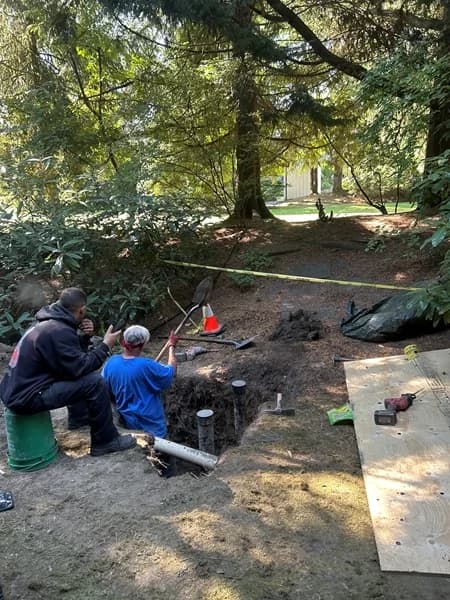
Recurring backups, root intrusion, a damaged camera finding, wet ground, settlement, or a line that cannot be restored with appropriate clearing.
Access, the defined repair, testing, backfill, and clear coordination for any required restoration or municipal boundary question.
Hidden conditions, utilities, pipe material, depth, access, weather, and the confirmed failure location can all affect the final scope.
A defensible repair scope
Underground work has hidden conditions. A useful scope does not pretend otherwise; it explains the known evidence, the proposed access, what could change, and the checks required before the site is closed.
Use camera evidence, access points, line location, symptom history, and any previous records to avoid treating a broad underground area as the repair target.
Consider active drainage risk, temporary use, suite or tenant impact, shutdowns, equipment access, soil handling, and site protection before disruptive work begins.
Testing, inspection requirements where applicable, backfill, compaction, and restoration responsibility should be clear before the exposed work is covered.
Camera findings, cleanout access, line location, and property records help distinguish a repairable section from a problem that needs a broader plan.
We consider active drainage risk, temporary measures, shutdowns, resident impact, and safe access before disruptive work begins.
For strata and managed properties, the useful record includes observed conditions, the approved scope, testing, restoration requirements, and future recommendations.
Define the next step
For an active backup or water damage, call now. For planned sewer work, share the address, symptom history, camera footage or reports if available, and any access or strata authorization requirements.
Learn when inside-the-line evidence can separate a clearing question from a repair question.
Read the guide →RELATED SERVICESome recurring restrictions need cleaning and verification before repair is considered.
Explore hydro jetting →RECENT FIELD REPORTSee how camera evidence turned restored flow into a documented repair decision.
Read the field report →FIELD REPORTSee how protected access and exposed-pipe verification support a repair decision without treating a yard as an exploratory scope.
Read the field report →