Real Metro Vancouver sewer work
A sewer repair starts with the line condition, not a guess about where to dig.
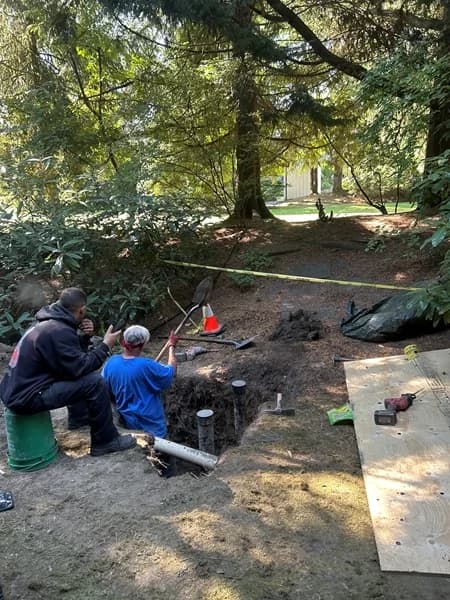
This field record moved from a recurring sewer concern and root evidence to controlled access at the likely buried-line area. The purpose of excavation was to expose the condition safely and define the repair around evidence.
Request service- Starting condition
- Recurring sewer concern
- Evidence considered
- Roots and line condition
- Work approach
- Controlled targeted access

The decision point
Restored flow is not always the end of the sewer conversation.
When roots, recurring backups, or a concerning camera finding point to a buried-line issue, the responsible next step is to narrow the likely repair area before opening the property. That means connecting the symptom history, available access, camera evidence, route information, and site constraints into one plan.
On this job, the work area was protected and access was opened at the likely line location. Once the pipe area was exposed, the crew had direct visual and physical access to define what the repair needed, rather than treating a broad yard area as the scope.
Access changes the decision
The exposed line is evidence, not just a hole in the ground.
What a defensible repair path looks like
Prove, plan, expose, then close out.
Buried work has unknowns. A clear process makes the known evidence, the working area, and the next decision visible before restoration begins.
- 01
Confirm the likely failure area
Use camera findings, accessible cleanouts, symptom history, known route information, and any previous records to narrow the repair target.
- 02
Protect the property and people
Plan utilities, depth, access, soil, groundwater, equipment placement, and surface protection before opening the work area.
- 03
Expose enough to verify the condition
Targeted access makes it possible to assess the affected pipe and define the repair without treating a larger area as automatically necessary.
- 04
Test and document before restoration
The closeout should distinguish the work completed, verification performed, remaining limitations, and the responsibilities for backfill and surface restoration.
The useful outcome
A repair decision that is tied to the real condition.
The value of the field work was not just gaining access. It was creating a defensible path from the sewer symptom to the exposed line condition, then from the condition to a targeted repair and closeout plan.
- Evidence-led access rather than exploratory digging
- A protected working area around the confirmed line location
- A clearer basis for repair, testing, and restoration planning
- A record that separates current findings from assumptions
Need the same kind of help?
Start with the problem. We will help plan the next step.
Related field records
See a few related decisions from the field.
These are selected for the same type of system, property, or service concern. The full library is available when you want to explore more.
Discuss your project Explore sewer-line repair