For homeowners
Plumbing help for your home.
You do not need the right plumbing term to get useful help. Choose the closest situation below, protect the property where it is safe to do so, and we will help define the next step.
Tell us the address, what is affected and when the problem started.
Call now. Do not wait for a form response.
If water is moving, sewage is backing up, an essential service is lost, or a condition seems unsafe, call us directly. Do not operate unfamiliar gas or electrical controls.
Call 604 496 1661 →Collect the useful clues, then request service.
Note when it started, what is affected, whether weather or fixture use changes it, and any safe photos, past invoices, or equipment model information.
Request planned service →A leak, flood, or backup is getting worse.
Protect people and property first. If water or sewage is moving, call so the active condition can be assessed directly.
Get emergency help →SLOW OR BACKING-UP DRAINA sink, toilet, tub, or several fixtures are affected.
The number of fixtures and the pattern matter. A recurring or shared-line problem may need more than another clearing.
Understand the drain pattern →WATER WHERE IT SHOULD NOT BEThere is staining, moisture, pressure loss, or an unexplained wet area.
Separate supply water, drainage, rain, groundwater, and equipment discharge before opening a wall, floor, or yard.
Narrow the source →NO HOT WATERThe water heater is not keeping up or has stopped.
Model information, visible condition, energy source, and who is affected help determine whether this is urgent diagnosis or planned replacement work.
See what to check safely →SUMP OR RAINWATERThe pump is running, silent, or water is entering during rain.
A pump is only one part of a drainage system. Safe access, power, discharge, and the water path all need consideration.
Review sump-pump guidance →LOW WATER PRESSURE OR A SUPPLY LEAKThe water supply has changed or the yard is unexpectedly wet.
Tell us whether one fixture or the whole home is affected. Pressure loss and unexplained wet areas need investigation before a buried water line is assumed to have failed.
Explore water-line investigation →RECURRING MAIN-LINE BACKUPThe sewer concern keeps returning after clearing.
Roots, a damaged section, or restricted access may need a separate investigation and repair plan. Camera inspection and video are additional-charge services, not included free with drain cleaning.
Explore sewer diagnosis and repair →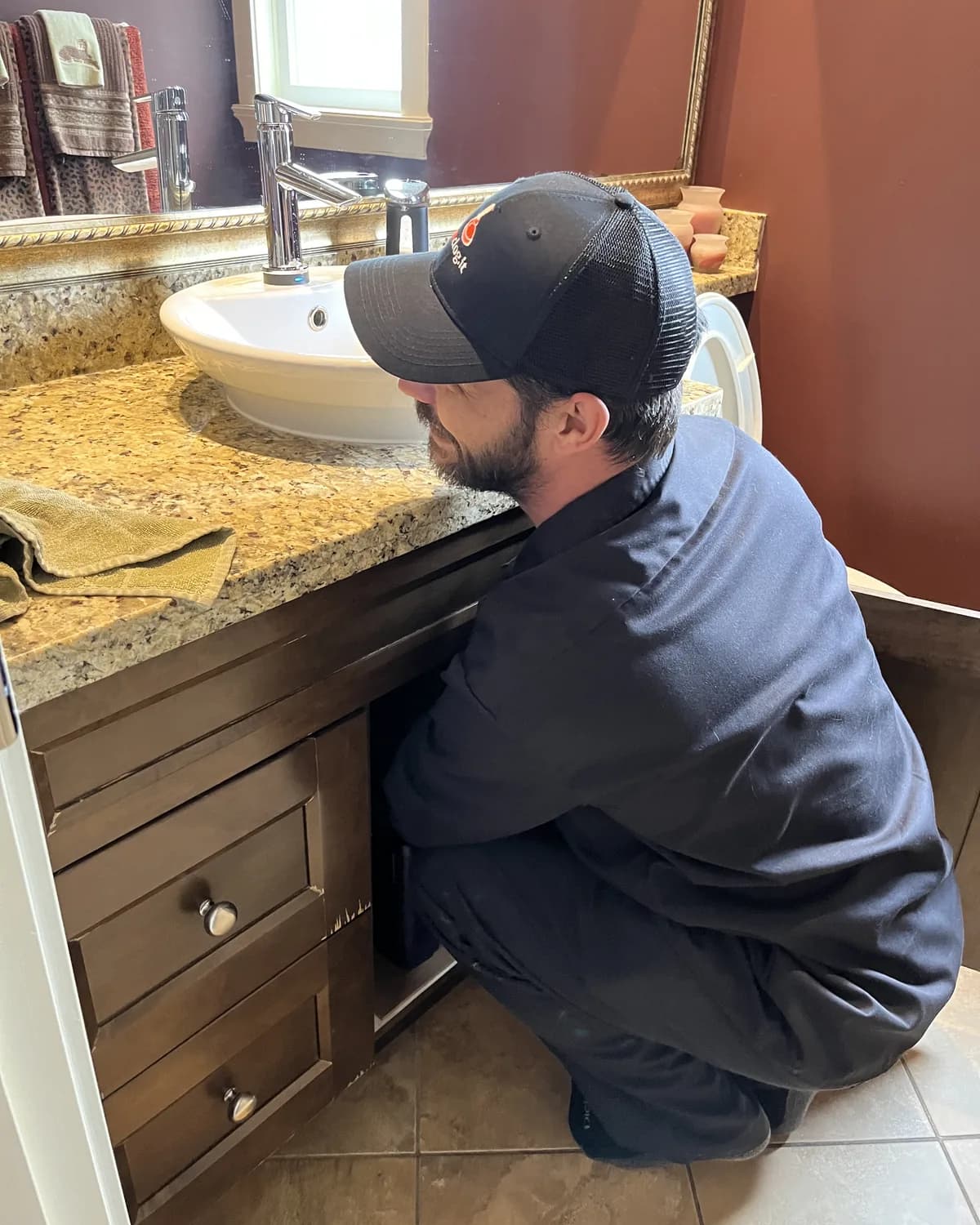
Field approach
A visible symptom is not automatically the repair.
On an accessible bathroom-sink service call, the fixture, drain, connections, and surrounding cabinet area can be checked before a repair is recommended. That is the standard for simpler calls too: establish what is happening, explain what can be confirmed, and avoid treating a guess as a repair plan.
- Observe
- What changed, where it appears, and what triggers it.
- Confirm
- The accessible fixture, pipe, drain, valve, or equipment condition.
- Decide
- The least disruptive step supported by the evidence.
Field notes
Real work that starts with a home concern.
These recent records cover the everyday work homeowners are more likely to recognize: restoring hot water, clearing an accessible fixture, and completing a laundry connection without leaving the drain or leak checks unanswered.
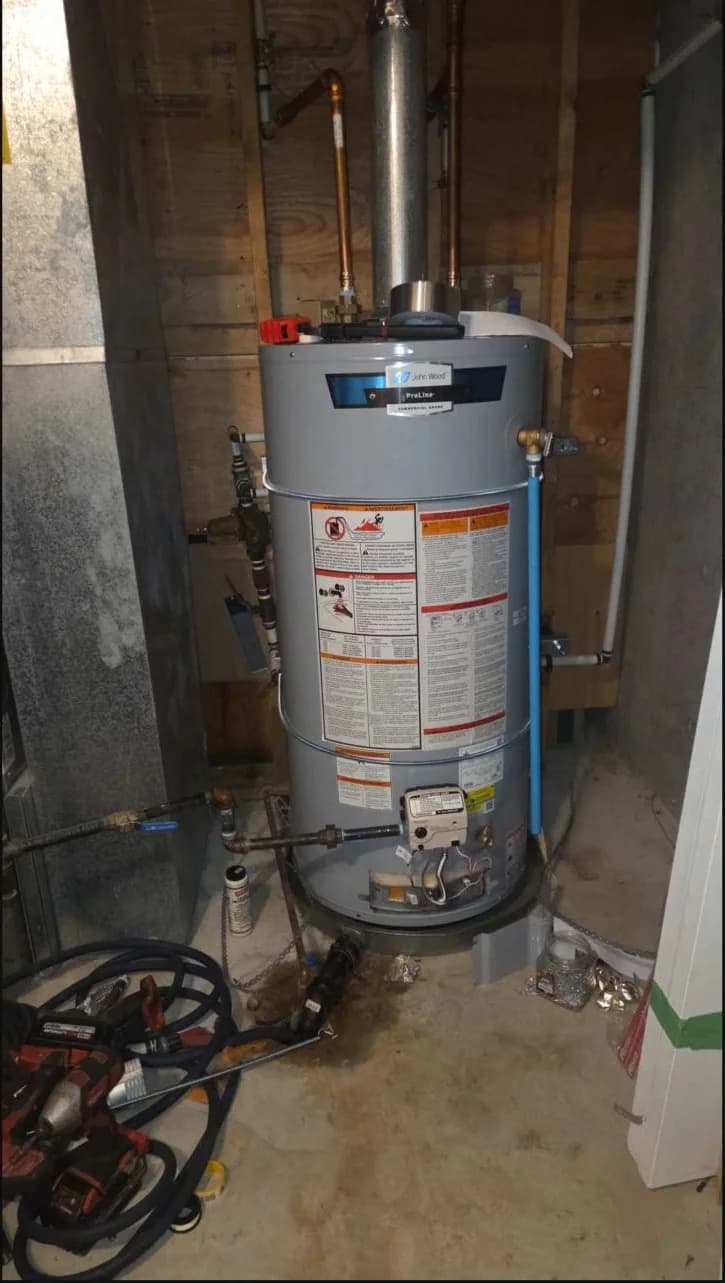
Replacing a failed gas water heater and testing the result
Read the field record →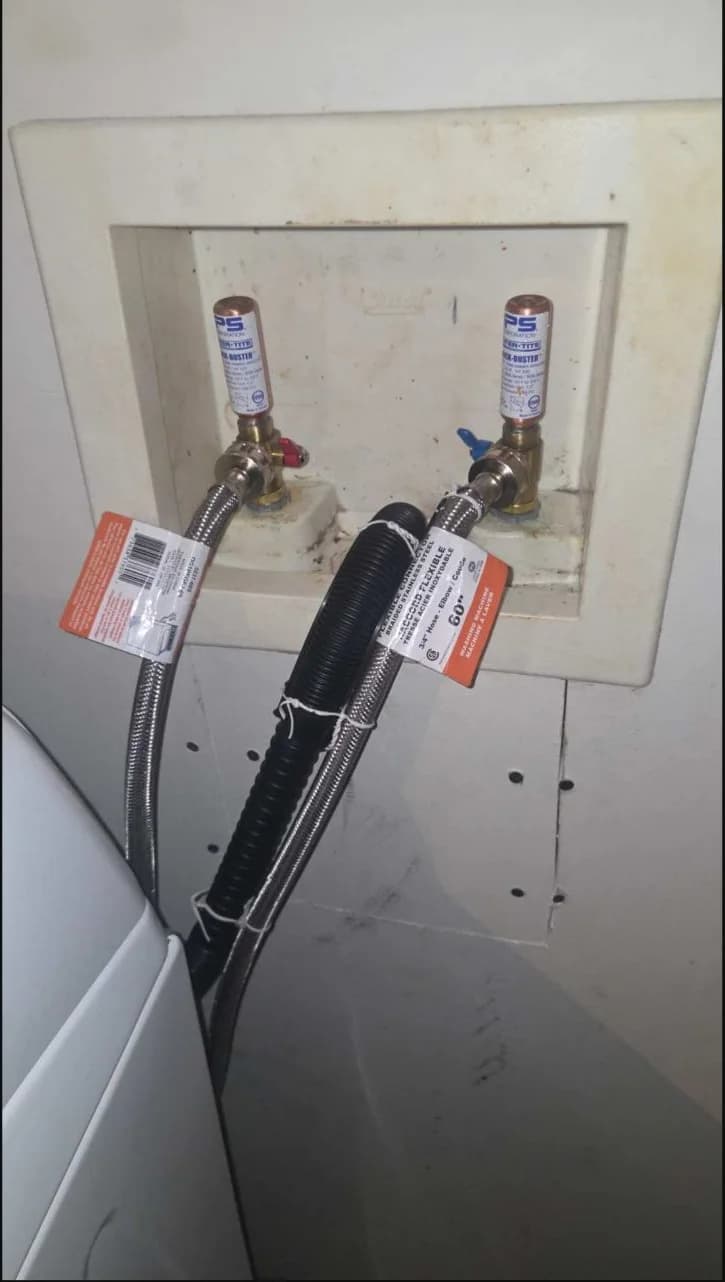
Clearing the drain before testing new appliance connections
Read the field record →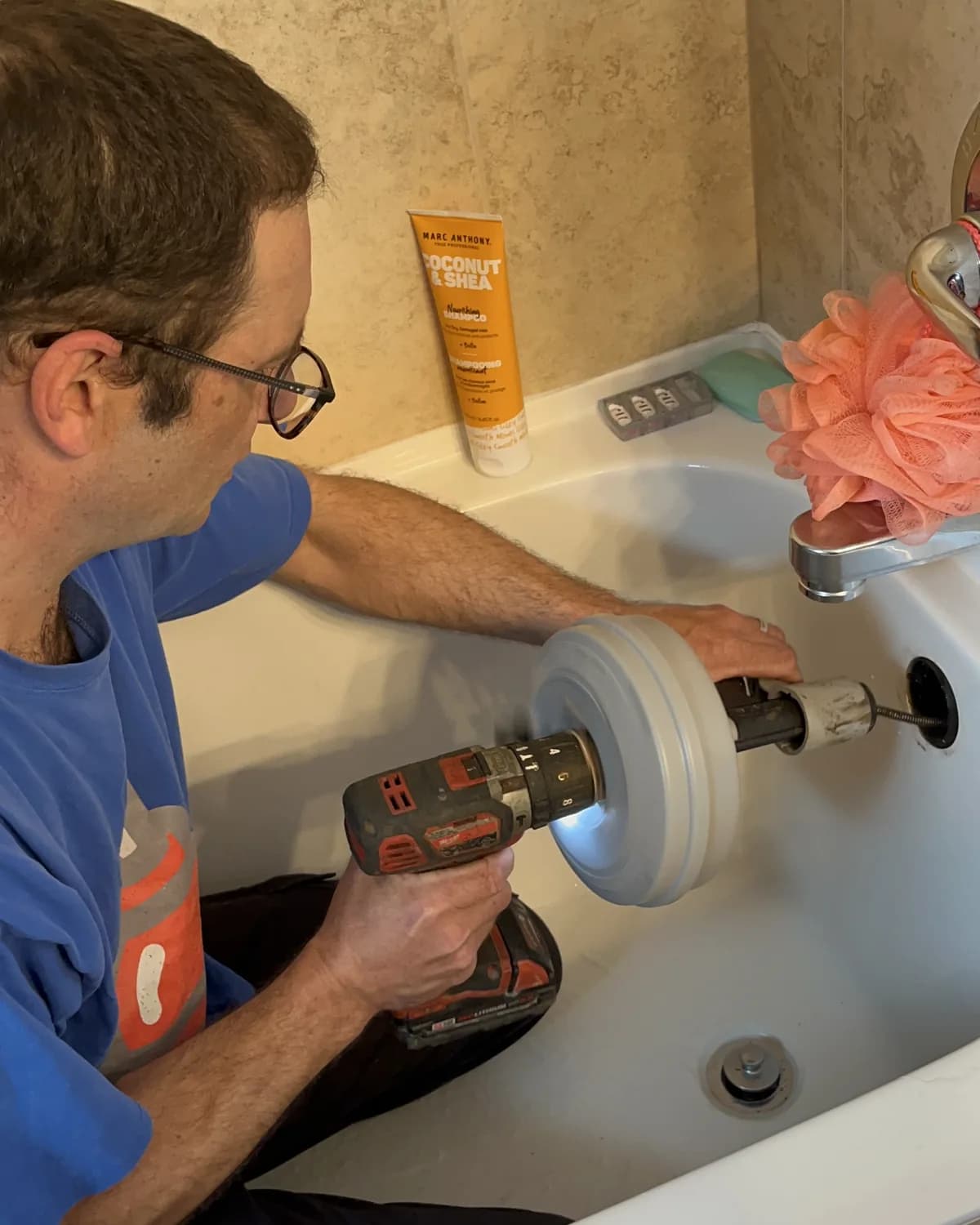
Clearing an accessible tub drain and checking the result
See the diagnostic approach →A better first visit
Give the problem a useful starting point.
A few accurate details can help separate an active emergency from planned diagnosis and reduce the chance of treating the wrong part of the system.
- 01NOTICE
Describe the pattern, not the assumed repair.
Which fixtures, rooms, or areas are affected? When did it begin? Does rain, water use, time of day, or one appliance make it change?
- 02PRESERVE
Keep only the information that is safe to collect.
Take a wide photo, record a model number, and keep previous reports if available. Do not open panels, enter unsafe areas, or operate unfamiliar gas or electrical controls.
- 03CHOOSE
Use the service path that matches the condition.
Call for active water, sewage, loss of an essential service, or an unsafe condition. For stable or recurring concerns, request planned service with the property details and pattern.
Before booking
Information that makes the first visit better.
What photos should I send?+
Include the affected area, a wider access view, equipment labels, visible valves or cleanouts, and any damage. Do not enter unsafe areas for photos.
Should I buy a part first?+
Usually not before compatibility and cause are confirmed. Model, size, code, access, warranty, and connected-system requirements can change the correct solution.
Can a quote be given from a photo?+
Photos improve triage, but concealed conditions and system behaviour often require onsite assessment before a reliable scope can be set.
Will one visit solve everything?+
Many repairs can be completed promptly. Others need diagnosis, specialty parts, permits, excavation, restoration, or separately approved work.