
 Emergency plumbing
 Drain diagnostics
 Hydro jetting
 Sewer line repair
 Leaks & water mains
 Mechanical service
 Storm & flood response
 Underground & excavation
 Water heaters
 Plumbing checkup
 Homeowners
 Strata councils
 Renovations & restoration

Replacing a failed gas water heater, then testing it.
The existing gas water heater had failed at the burner area. The replacement work included the connected water and gas systems, venting, seismic restraint, burner operation, and final leak checks.
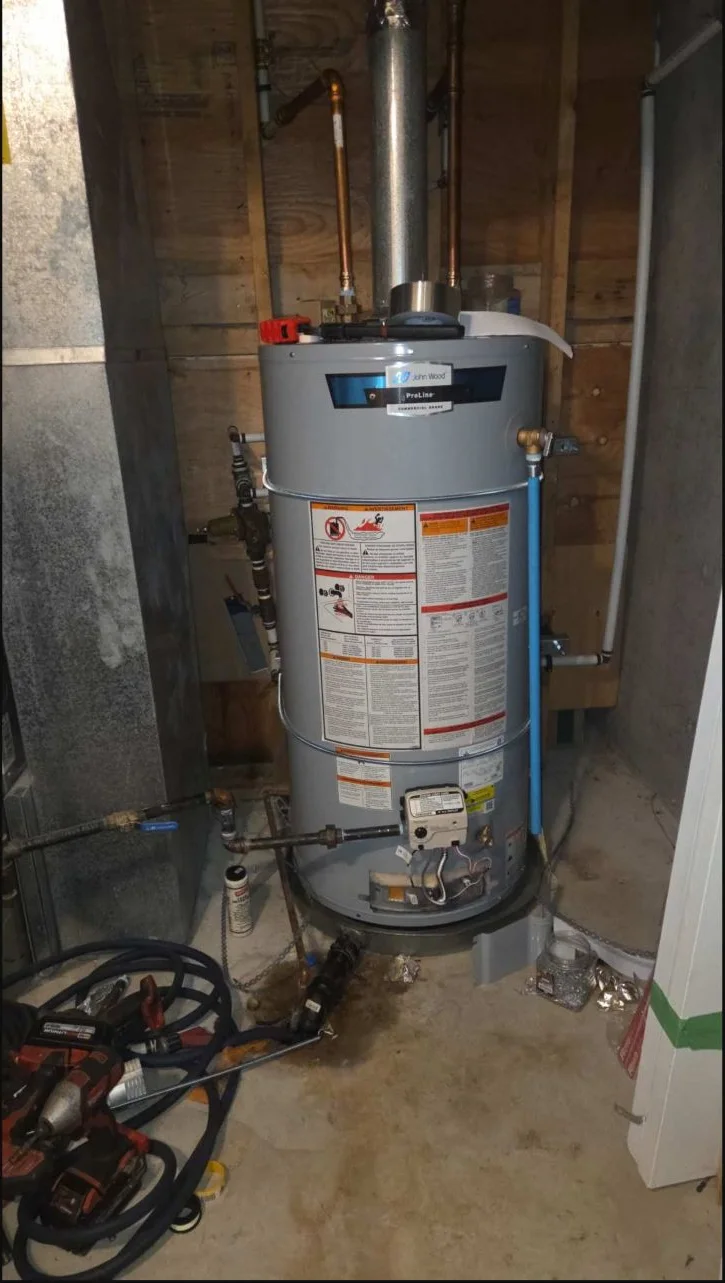
The failure was confirmed before replacement work began.
The old tank had failed at the burner. Before replacing it, the technician checked the gas, water, venting, drainage and access.
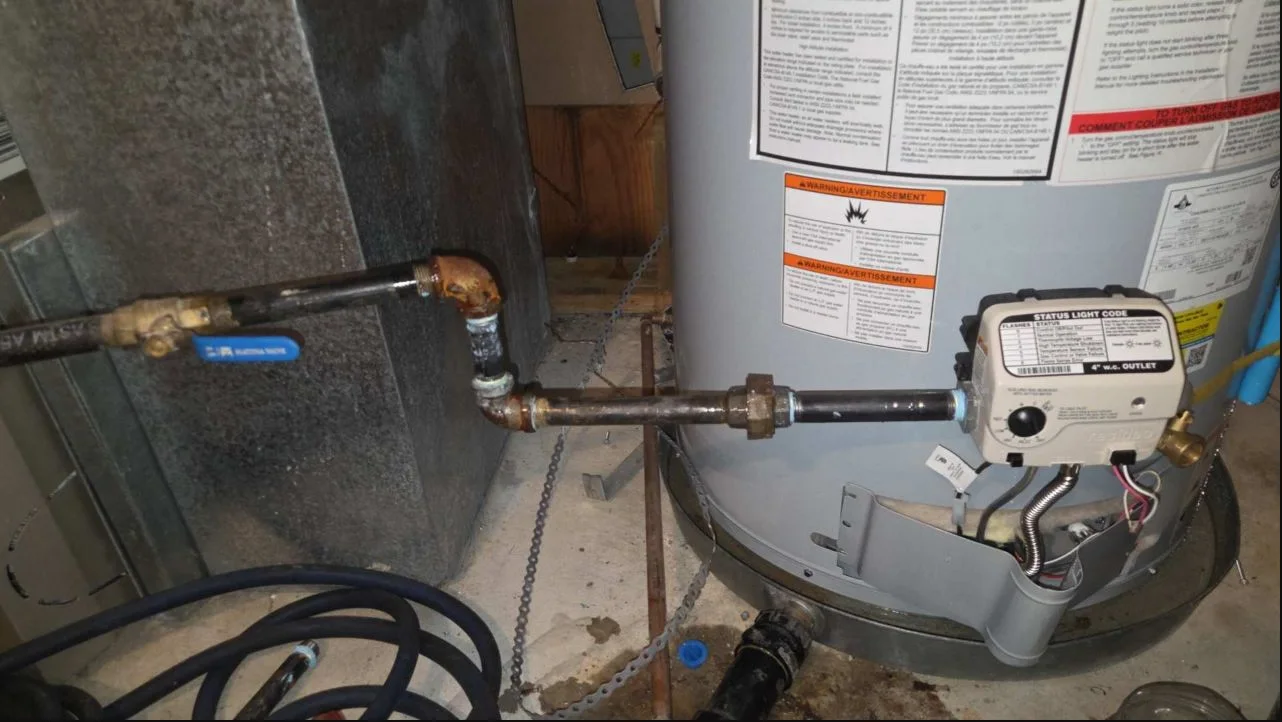
The new water heater was installed and strapped to the framing for earthquakes. The gas was tested, the water connections were checked for leaks, and the burner was watched running before the job was signed off.
The existing expansion relief valve was checked and still worked, so it wasn't replaced.
Confirm the failure, install correctly, and test the result.

Confirm the equipment condition
Find what failed and look at the installation before deciding between repair and replacement.Review connected systems
Check access, water and gas connections, venting, drainage, earthquake straps and safety valves.Complete the replacement
Install the new heater, connections and straps, and keep parts that still work.Test before sign-off
Test the gas, check the water connections for leaks, watch the burner run, and clean up.Hot water was restored with the installation tested and documented.
The failed tank was replaced, the new one strapped in, and the gas and water connections checked before we left.
Failure confirmed before replacement
New water heater installed and restrained
Gas and water connections tested
Burner operation verified
Start with the problem. We will help plan the next step.
More case studies like this one.
These are selected for the same type of system, property, or service concern. The full library is available when you want to explore more.
Know someone who needs a plumber?
Two easy ways to send people our way, and a quick one if we did a good job for you.