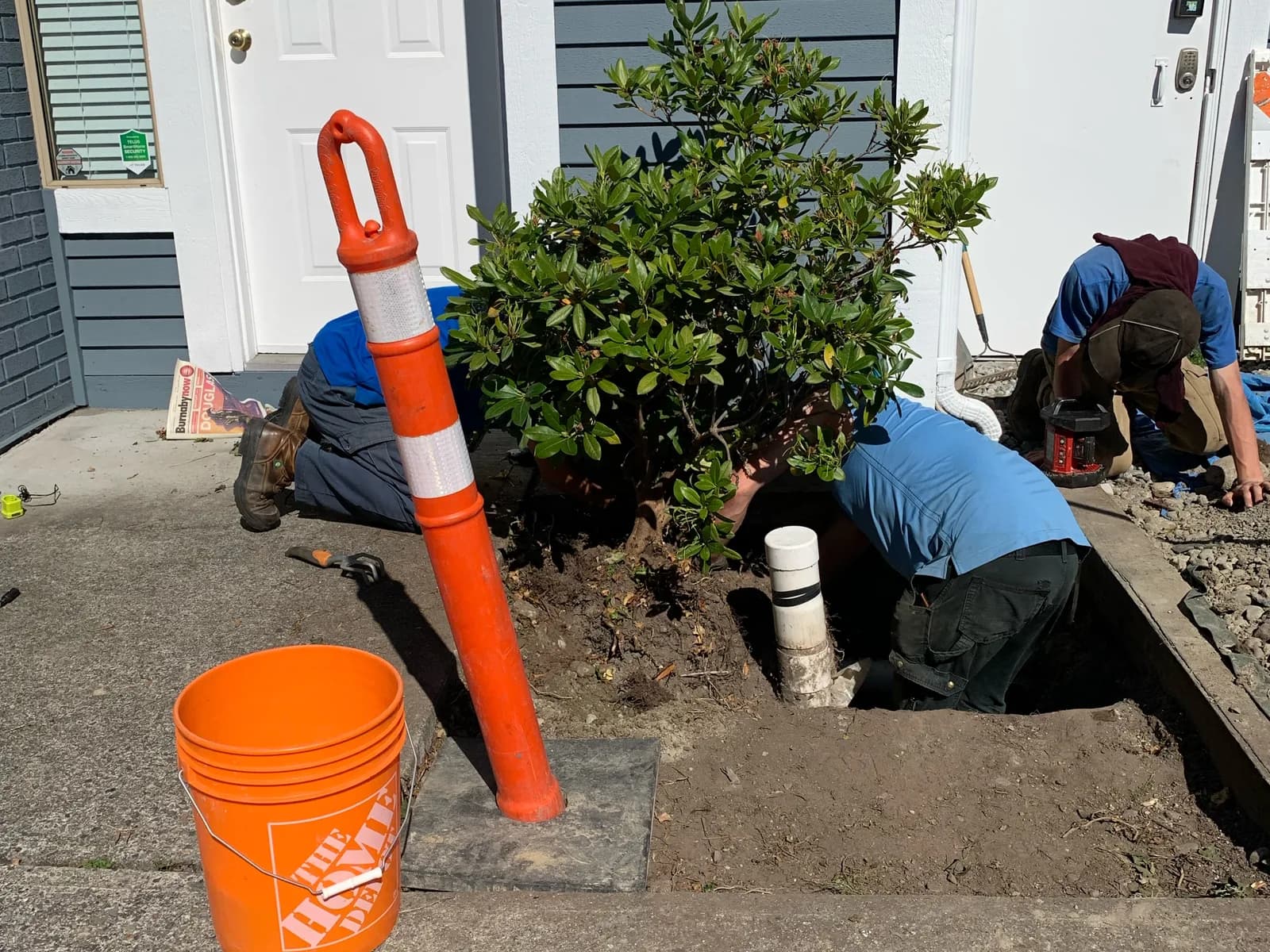
The likely failure and repair area are narrowed before digging
Plumbing & mechanical service
Underground & Excavation
Excavation should solve a confirmed underground problem, not become an expensive search. We connect the diagnostic evidence to a targeted access, repair, testing, and restoration plan.
Service areaMetro VancouverForHomes · Strata · Property managers
Start with the problem.
Leave with a clear next step.We assess before recommending work, explain the scope in plain language, and document what was done.What a good result feels like
Reach the failed service safely, repair it properly, and leave every responsibility clearly defined.
Utilities, depth, access, soil, water, and restoration are planned together
Testing, backfill, and site restoration responsibilities are documented
When this service may be needed
Start with what you are seeing.
Symptoms help establish urgency and the right investigation path. They do not, by themselves, confirm the failed component.
A buried service has been isolated as the likely failure
Repeated surface repairs have not resolved the condition
Repair requires physical access to water, sewer, or drainage piping
A camera, pressure test, or leak investigation has narrowed the failure area
Settlement, washout, roots, or recurring wet ground suggest a buried problem
Plan below grade before breaking ground.
Safe access depends on more than the failed pipe.
The repair area, utilities, soil, groundwater, equipment access, shutdown, and restoration all affect how underground work should proceed.
Confirmed repair area
Camera, locating, pressure, surface, and service-history evidence should guide where access begins.
Utilities and ground conditions
Public and private services, soil, depth, groundwater, structures, and trees influence the excavation plan.
Pipe work and verification
The exposed condition determines the final repair length, material, connections, and testing.
Backfill and restoration
Approved fill, compaction, surface restoration, and responsibility for each trade must be clear.
How the work moves forward
From reported symptom to defined next step.
- 01Confirm the failed service and narrow the repair area
- 02Review utilities, access, ground conditions, and restoration needs
- 03Plan safe excavation, shoring, shutdown, and material handling
- 04Expose and repair the approved section of service
- 05Test, backfill, compact, and coordinate restoration
What the service is for
A repair decision grounded in observed conditions.
Excavation should be targeted, not exploratory by default. Good planning connects diagnostic evidence with utility information, safe access, the repair method, testing, backfill, and restoration responsibilities.
What can change the scope
Access and hidden conditions matter.
Actual underground conditions can differ from records. Unknown utilities, depth, soil, groundwater, concrete, contamination, roots, access, and failed-pipe extent can change the approved scope.
What affects the price
A complete excavation scope includes the work around the pipe.
Digging is only one part of the job. We identify known access, safety, repair, testing, backfill, and restoration requirements before work starts, then document hidden changes.
Depth and access
Excavation depth, equipment route, working room, structures, traffic, and occupied areas.
Ground conditions
Soil, rock, groundwater, contamination, roots, shoring, hauling, and disposal.
Repair
Pipe size, material, condition, repair length, fittings, shutdowns, and testing.
Closeout
Backfill, compaction, inspections, permits, concrete, paving, landscaping, and other restoration.
Your service record
Useful answers should remain useful after we leave.
Documentation is scaled to the work. Our goal is to give you a clear account of the condition, the approved work, the result, and any follow-up worth planning.
What we found
Observed conditions, relevant limitations, and the information used to define the work.
What was completed
The authorized work performed and relevant checks or testing completed on site.
What comes next
Outstanding conditions, monitoring notes, photos when useful, and recommended next actions.
Core service capabilities
Buried water-line access
Sewer and drainage repairs
Targeted excavation
Site restoration coordination
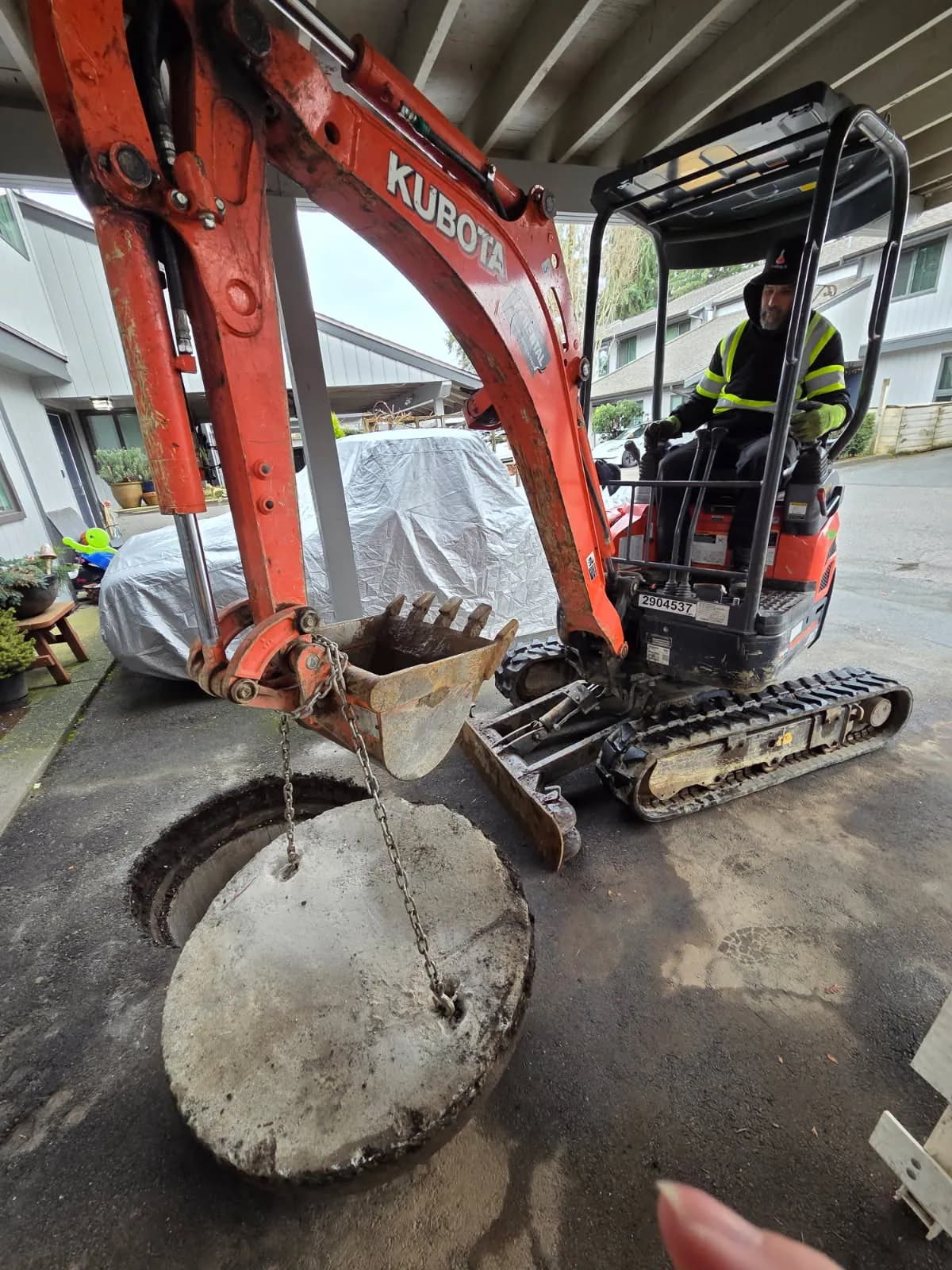
See the work
Equipment choice is part of a controlled excavation plan.
Real field equipment is selected around access, utilities, soil, restoration, and the repair area that has actually been confirmed.
Read the case studyCommon questions
Useful answers before you call.
Is excavation always the first option?+
No. Investigation should establish whether cleaning, lining, localized access, trenchless work, or another repair is viable before open excavation is selected.
Who restores landscaping or concrete?+
Restoration responsibility should be defined in the approved scope. It may be completed by Pure Mechanical, coordinated with another contractor, or retained by the owner.
Will other utilities be located first?+
Utility information and safe-dig requirements form part of planning, but private services and inaccurate records can require additional locating or careful exposure.
What affects the cost of excavation?+
Depth, soil, groundwater, access, utilities, shoring, disposal, pipe condition, repair length, backfill, compaction, permits, and restoration all affect cost.
How do you reduce unnecessary digging?+
We connect available camera, locating, pressure, surface, and service-history evidence to the smallest practical access area. Hidden conditions can still change the final excavation.
Can people remain in the building during the work?+
Often, but water or drainage shutdowns, equipment movement, noise, access control, and safe separation from the excavation must be planned for the specific site.
Request service
Let’s assess the
problem properly.
Tell us what you are seeing. We’ll help you understand the right next step.
Start your request →Or call 604 496 1661