
Active water movement and immediate property risk are assessed first
Plumbing & mechanical service
Storm Drains & Flood Response
When water is collecting or entering the property, you need more than a temporary clearing. We stabilize what we can, trace how the drainage system is behaving, and identify what may reduce recurrence.

Service areaMetro VancouverForHomes · Strata · Property managers

Field proof
Flood response has to follow the actual drainage path.
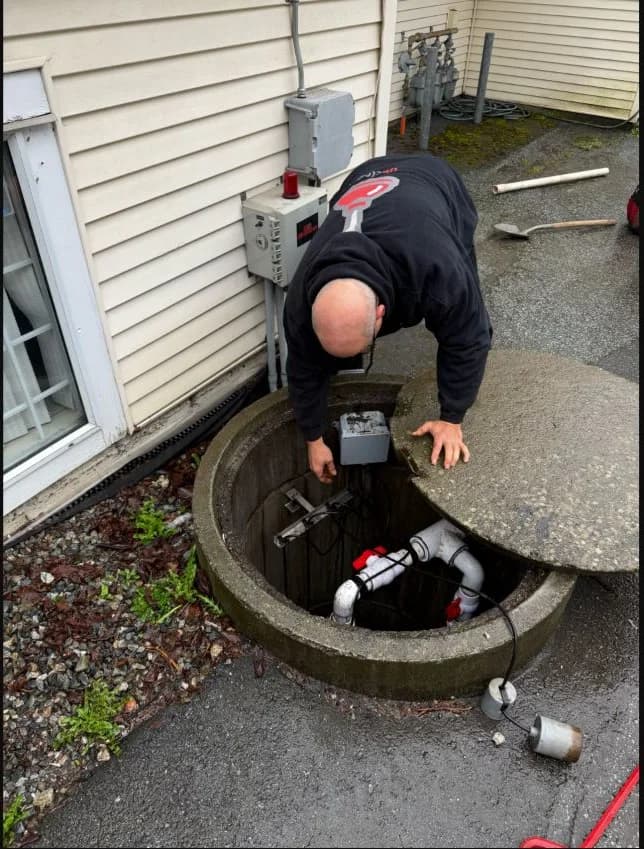
This documented exterior drainage repair shows why the visible water path, safe excavation, pipe condition, and closeout evidence all matter before calling a recurring event resolved.
Read the documented field work →Start with the problem.
Leave with a clear next step.We assess before recommending work, explain the scope in plain language, and document what was done.What a good result feels like
Move from active water and uncertainty to a controlled condition and a defensible drainage plan.
Inlets, outlets, pumps, grading, and downstream capacity are considered together
Emergency stabilization and corrective work are scoped separately
Follow the water path
Standing water does not automatically mean a blocked drain.
A surface inlet, storm line, sump, pump discharge, grading issue, groundwater condition, or downstream restriction can produce the same visible result. The response needs to stabilize active water and then identify which part of the system is not behaving as intended.
Water enters during rainfall
Record where it first appears, which drains or sumps are active, whether power is available, and what happens after rain stops. Timing is useful diagnostic evidence.
A pump runs or stops unexpectedly
Float operation, power, discharge route, debris, check valves, and downstream conditions can all affect the pump’s behaviour.
The same area floods repeatedly
Repeat events justify looking beyond the visible puddle to capacity, inlets, outlets, pipe condition, grading, groundwater, and property maintenance history.
When this service may be needed
Start with what you are seeing.
Symptoms help establish urgency and the right investigation path. They do not, by themselves, confirm the failed component.
Catch basins or surface drains are not accepting water
Water is entering parking, lower levels, or the building perimeter
The same area floods during rainfall or rapid snowmelt
A sump pump runs constantly, cycles unusually, or has stopped
Water appears at a foundation, parkade, window well, or lower-level drain
Follow the path of the water.
Flooding is a symptom. The drainage path explains the response.
Water can arrive from rainfall, grading, a blocked pipe, failed pumping, groundwater, or downstream capacity. We look at how these parts interact before defining corrective work.
Inlet or grading issue
Water may bypass or overwhelm catch basins because of debris, elevation, slope, or limited inlet capacity.
Storm-line restriction
Roots, sediment, damage, or a downstream blockage can limit how quickly the system drains.
Sump or power problem
A failed pump, control, discharge, or power source can allow water to rise in a lower area.
Groundwater or system capacity
High groundwater and overwhelmed municipal systems can affect a property even when private piping is open.
How the work moves forward
From reported symptom to defined next step.
- 01Identify active water movement and immediate property risk
- 02Check accessible inlets, outlets, sumps, and drainage paths
- 03Restore flow or stabilize the condition where practical
- 04Test how the system behaves after stabilization
- 05Document recurrence risks and define corrective work
What the service is for
A repair decision grounded in observed conditions.
Flood response considers both the active water and the system intended to carry it away. Surface grading, catch basins, storm piping, perimeter drainage, pumps, and discharge conditions may interact.
What can change the scope
Access and hidden conditions matter.
No contractor can guarantee flood prevention. Rainfall intensity, municipal capacity, groundwater, grading, hidden pipe condition, power loss, and inaccessible components affect system performance.
What affects the price
Stabilization and permanent correction are separate decisions.
The first priority is controlling active risk where practical. Investigation, pump work, excavation, grading, or drainage replacement is then scoped and approved separately.
Active condition
Water volume, affected area, contamination, immediate risk, and emergency timing.
System access
Catch basins, cleanouts, sumps, outlets, line depth, and safe equipment access.
Cause and method
Debris, roots, damage, pump failure, groundwater, and the testing or equipment required.
Corrective work
Excavation, pumps, controls, grading, pipe replacement, restoration, and weather conditions.
Your service record
Useful answers should remain useful after we leave.
Documentation is scaled to the work. Our goal is to give you a clear account of the condition, the approved work, the result, and any follow-up worth planning.
What we found
Observed conditions, relevant limitations, and the information used to define the work.
What was completed
The authorized work performed and relevant checks or testing completed on site.
What comes next
Outstanding conditions, monitoring notes, photos when useful, and recommended next actions.
Core service capabilities
Storm-line backup response
Surface flooding assessment
Water-intrusion mitigation
Drainage repair planning
Make the next decision easier
When a sump pump needs attention
Understand the pump, drainage path, power, and rainfall questions that shape the next response.
Read the practical guideEvidence for the next decision
Useful proof, not generic promises.
These real field records and practical guides explain the evidence, access, and follow-up questions that shape this work.
FIELD REPORT
When a catch basin needs more than cabling
A real exterior drainage investigation showing why clearing alone may not answer the drainage-path question.
Open →FIELD REPORTWhen a high-water alarm has more than one cause
A recent response showing temporary pumping, obstructed impellers, restart testing, and a separate electrical concern.
Open →DECISION GUIDEWhen a sump pump needs attention
A clear way to think about pump behaviour, rainfall, power, and the drainage path.
Open →Common questions
Useful answers before you call.
Is standing water always a blocked drain?+
No. It can also result from overwhelmed capacity, grading, pump failure, downstream restriction, groundwater, or a closed or damaged outlet.
Can the permanent repair happen during the emergency visit?+
Sometimes, but the immediate goal is stabilization. Investigation, excavation, replacement, or restoration may require a separate scope.
What should property managers provide?+
Known drainage drawings, prior reports, pump information, affected-area access, site contacts, and any history of rainfall-related incidents.
What affects the cost of flood and storm-drain work?+
Active water volume, access, line depth and length, pumps, debris, downstream restrictions, weather, after-hours response, and required investigation all affect cost.
Should I wait until the rain stops?+
No if water is entering or threatening the property. Call while the condition is active. The way water moves during rainfall can also provide useful diagnostic evidence.
Can you guarantee the area will never flood again?+
No. A good plan can address observed defects and improve drainage, but extreme rainfall, municipal capacity, groundwater, power loss, and future blockages remain outside any contractor's control.
Request service
Let’s assess the
problem properly.
Tell us what you are seeing. We’ll help you understand the right next step.
Start your request →Or call 604 496 1661