
Real exterior drainage work
When a catch basin needs more than repeated cabling.
A recurring exterior drainage backup needs a defined drainage path, safe access, and a clear explanation of what the available evidence can, and cannot,confirm.
Request service- Property
- Multi-unit exterior drainage
- Initial condition
- Catch basin backed up with debris
- Decision
- Move from repeated clearing to line investigation
The decision point
Movement is not the same as a confirmed drainage solution.
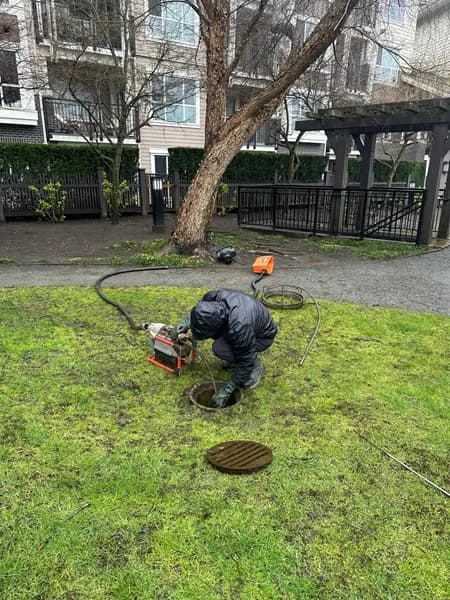
The initial field condition was a catch basin holding debris and water. Repeated clearing attempts produced some movement, but they did not establish a dependable drainage route or explain a likely downstream restriction.
That changed the useful question from ‘can it be cabled again?’ to ‘where does the line lead, what condition is it in, and what access is needed to investigate it properly?’ The recommended next scope was based on that uncertainty, not on a blanket promise that clearing alone had solved the system.
Field evidence
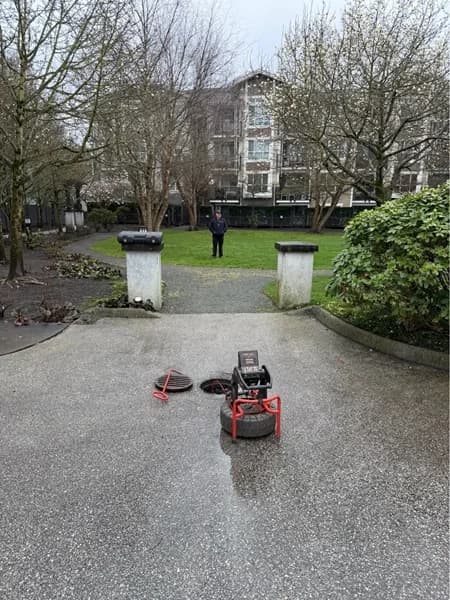
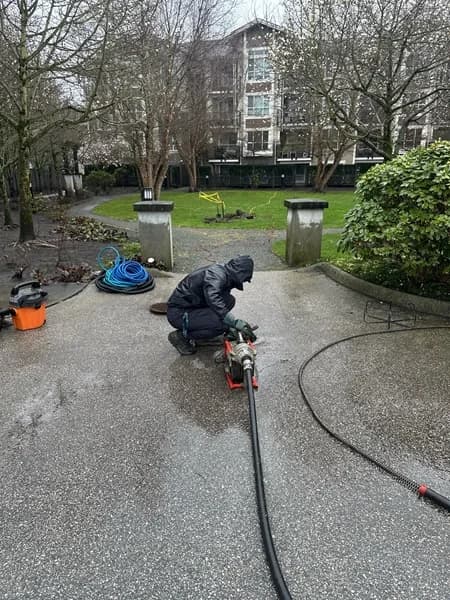
Visible debris is only one part of the drainage-path question.
The drainage method
Stabilize the condition, then define the next scope from evidence.
- 01
Document the active condition
Record where water and debris are collecting, what is accessible, and the conditions at the time of service.
- 02
Establish safe access
Plan the work area, equipment position, and practical points for clearing or inspection without creating a new site risk.
- 03
Clear and observe
Use the accessible result as evidence, while recognizing that partial movement does not prove a downstream line is sound.
- 04
Define the next decision
Use camera or route verification, and only then consider additional high-pressure cleaning or targeted access when the evidence supports it.
Useful outcome
The useful output was not a blanket claim of permanent resolution.
The visit produced a documented basis for the next decision instead of treating repeated clearing as proof that the exterior drainage system was fully resolved.
- Active catch-basin condition documented
- Access and equipment requirements made visible
- A clear reason to verify the line route and condition
- A defined basis for any further high-pressure cleaning or targeted access
Need the same kind of help?
Start with the problem. We will help plan the next step.
Related field records
See a few related decisions from the field.
These are selected for the same type of system, property, or service concern. The full library is available when you want to explore more.
Discuss your project Explore storm-drain and flood response