
Supply, drainage, groundwater, and equipment symptoms are separated
Plumbing & mechanical service
Water Main & Leak Repairs
Unexpected water creates stress because the source and extent are unclear. We separate supply leaks from drainage and groundwater symptoms, narrow the likely failure, and explain the least-disruptive repair path supported by the evidence.
Service areaMetro VancouverForHomes · Strata · Property managers
Field proof
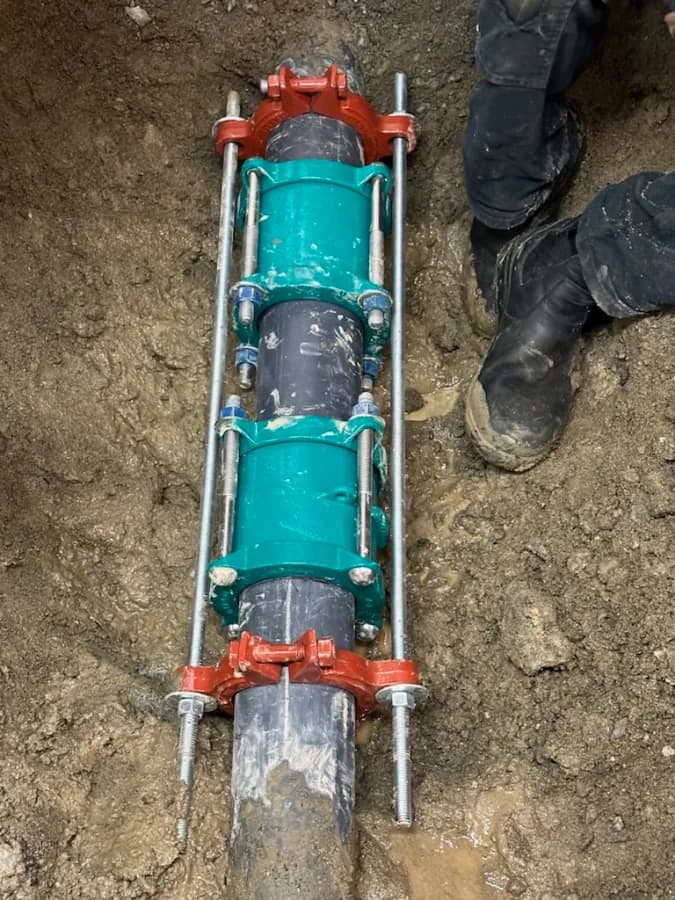
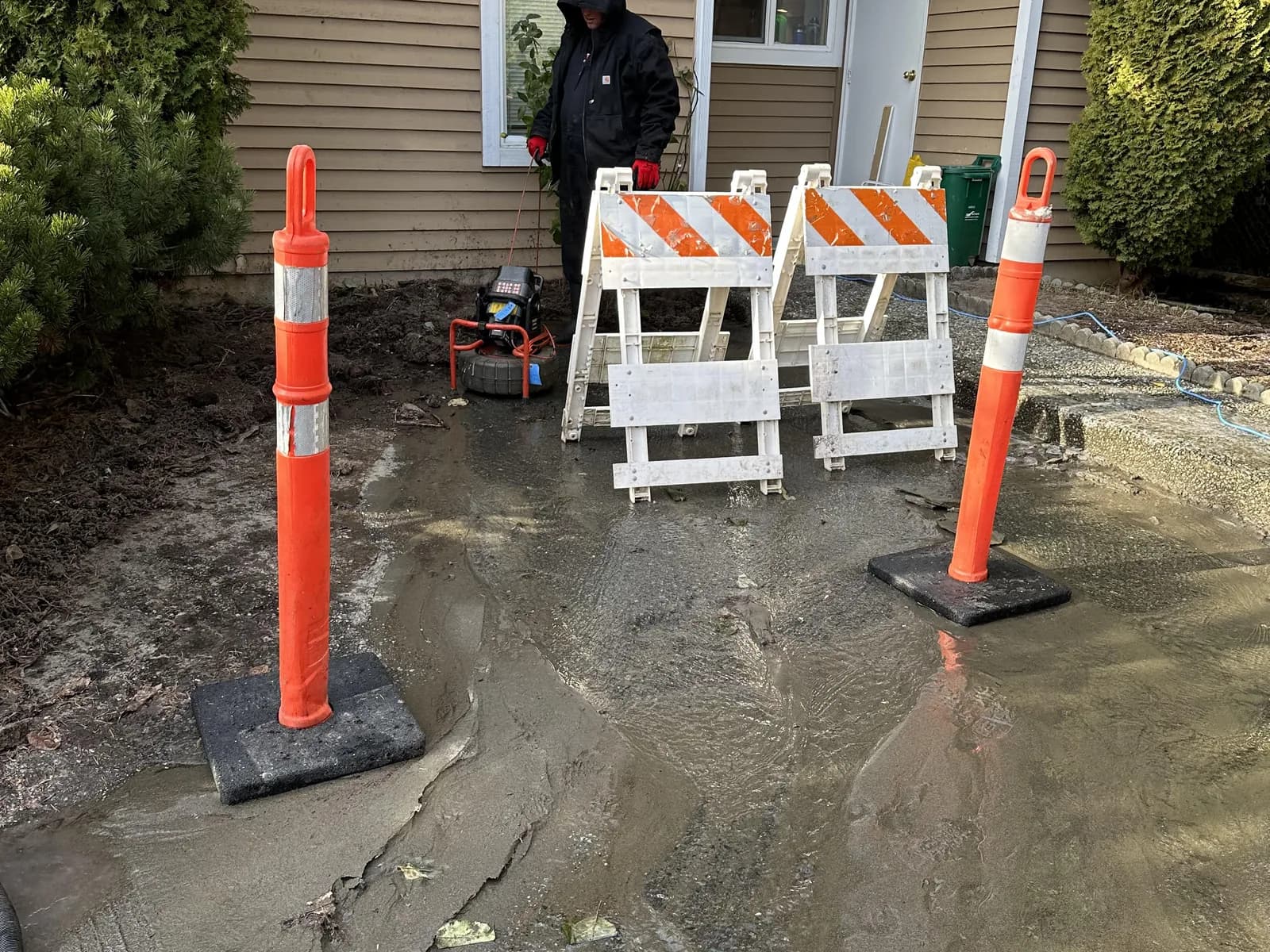
Buried-service work starts with evidence, access, and a defined repair area.
Protected access, utilities, shutdown planning, testing, and restoration are part of the scope from the start of buried water-service work.
Read the documented field work →Start with the problem.
Leave with a clear next step.We assess before recommending work, explain the scope in plain language, and document what was done.What a good result feels like
Find the likely failure without opening more of the property than the repair requires.
The investigation follows the likely pipe route and observed evidence
Access, shutdown, repair, testing, and restoration are defined upfront
Narrow the source before opening the property
Visible water is often not where the failure started.
Water can travel along framing, pipe routes, soil, drains, and finished surfaces. The investigation starts by separating pressurized supply water from drainage, rain, groundwater, and equipment discharge.
The meter or pressure changes
A moving meter with fixtures off or an unexplained pressure drop can support a supply-side investigation, but valves and regulators may produce similar symptoms.
The wet area follows use or weather
A pattern tied to a fixture, appliance, rainfall, sump operation, or irrigation is useful evidence, not proof of the final source.
A buried service may be involved
Route, depth, ownership boundary, utilities, access, shutdown, and restoration should be defined before excavation is approved.
When this service may be needed
Start with what you are seeing.
Symptoms help establish urgency and the right investigation path. They do not, by themselves, confirm the failed component.
An unexplained wet area or continuous water sound
Pressure has dropped or the water bill changed unexpectedly
Water appears near the foundation, service entry, or buried supply route
The meter moves while every known fixture is turned off
Water is discoloured, inconsistent, or interrupted without explanation
Find the source before opening the property.
Similar water symptoms can come from very different systems.
A wet floor, low pressure, and a high water bill do not prove the same failure. We separate the likely sources and narrow the repair area using observed evidence.
Local water release
A connection, valve, fixture, tank, or appliance may be leaking near the visible symptom.
Concealed building leak
Water lines inside walls, ceilings, floors, or mechanical spaces can fail away from where water appears.
Buried water-main failure
The line between the municipal connection and building may leak below landscaping, paving, or concrete.
Drainage or groundwater
Rain, drainage, condensation, and groundwater can resemble a pressurized water-line failure.
How the work moves forward
From reported symptom to defined next step.
- 01Confirm symptoms and isolate immediate risk
- 02Assess accessible piping, pressure, and likely leak route
- 03Use targeted investigation to narrow the failure
- 04Define and complete the approved repair path
- 05Pressure-test the work and document restoration needs
What the service is for
A repair decision grounded in observed conditions.
Leak work begins by separating fixture, distribution, service-line, drainage, and groundwater symptoms. The right access plan depends on where the failed pipe is and what surrounds it.
What can change the scope
Access and hidden conditions matter.
Concealed and buried leaks may not reveal an exact point without access. Finishes, concrete, landscaping, utilities, pipe material, and municipal responsibility can change the scope.
What affects the price
Investigation should narrow the repair, not expand the invoice.
We begin with the agreed diagnostic scope. If access, excavation, shutdown, restoration, or specialist support is needed, we explain the reason and define the next approval point.
Location
Whether the failure is exposed, concealed, below a slab, or buried outside.
Access
Finishes, concrete, landscaping, depth, traffic, and occupied areas around the pipe.
Pipe and repair
Material, size, condition, repair length, fittings, and testing requirements.
Coordination
Shutdowns, utilities, permits, municipal responsibility, and restoration work.
Your service record
Useful answers should remain useful after we leave.
Documentation is scaled to the work. Our goal is to give you a clear account of the condition, the approved work, the result, and any follow-up worth planning.
What we found
Observed conditions, relevant limitations, and the information used to define the work.
What was completed
The authorized work performed and relevant checks or testing completed on site.
What comes next
Outstanding conditions, monitoring notes, photos when useful, and recommended next actions.
Core service capabilities
Domestic water-line leaks
Hidden leak investigation
Pressure and supply issues
Water-main repair coordination
See the work
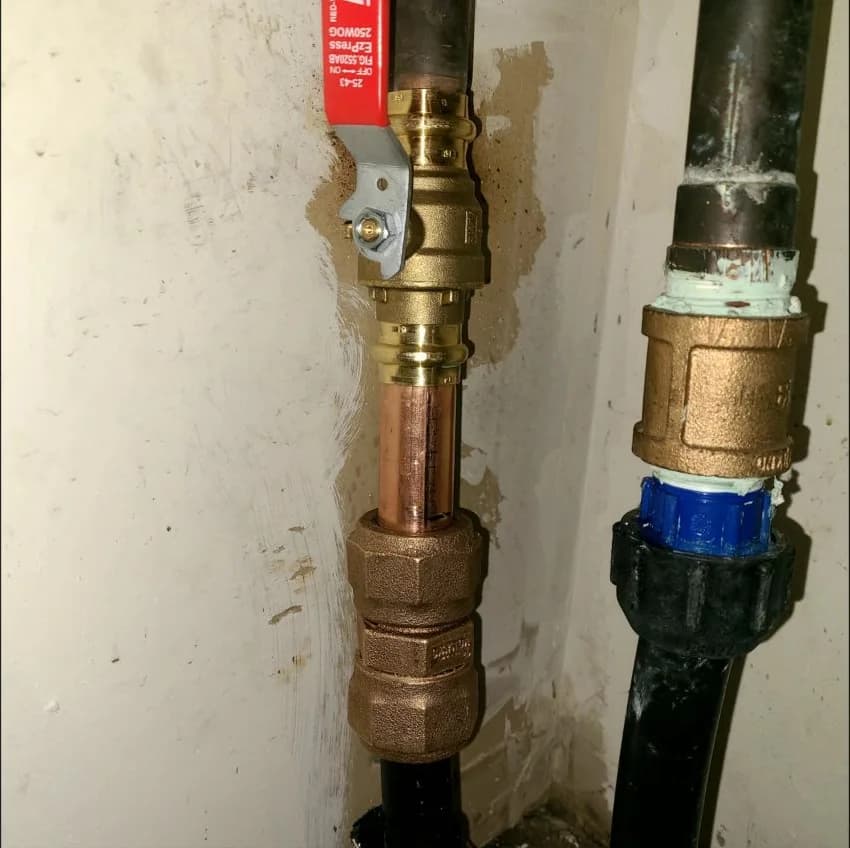
A real multi-unit water-service replacement.
Follow the project from observed failure and controlled excavation through new service installation and verification.
Read the case studyMake the next decision easier
How to narrow down a water leak
Separate supply water, drainage, rain, groundwater, and equipment discharge before a repair decision.
Read the practical guideEvidence for the next decision
Useful proof, not generic promises.
These real field records and practical guides explain the evidence, access, and follow-up questions that shape this work.
FIELD RECORD
Stopping a water-entry leak before it reached the building
A recent multi-unit repair record showing a controlled section shutdown, a failed PE coupling, and a targeted return to service.
Open →FIELD CASE STUDYReplacing a failed underground water service
A real multi-unit project from controlled excavation through installation and testing.
Open →FIELD CASE STUDYNarrowing down a concealed ceiling leak
See how visible evidence and thermal imaging focused the investigation before access.
Open →Common questions
Useful answers before you call.
Should I shut off the water?+
If water is actively damaging the property and you can safely identify the correct valve, shut it off and call. Do not operate unfamiliar gas or mechanical controls.
Can every leak be found without opening anything?+
No. Non-destructive methods can narrow the area, but confirmation or repair may still require access to the pipe.
Who repairs the water main?+
Responsibility depends on the location of the failure relative to the property line, meter, municipal system, and private service piping.
What affects the cost of a leak or water-main repair?+
Leak location, access, pipe depth and material, utility conflicts, shutdown needs, excavation, testing, and surface restoration all affect cost. We define the immediate investigation before recommending added work.
Will the yard, concrete, or paving need to be opened?+
Sometimes. The access area depends on the confirmed pipe route and repair method. We explain likely disturbance and restoration responsibility before excavation begins.
Is low water pressure always caused by a leak?+
No. Valves, regulators, fixtures, supply conditions, pipe restrictions, and municipal issues can also reduce pressure. Testing helps separate these causes.
Request service
Let’s assess the
problem properly.
Tell us what you are seeing. We’ll help you understand the right next step.
Start your request →Or call 604 496 1661