
 Emergency plumbing
 Drain diagnostics
 Hydro jetting
 Sewer line repair
 Leaks & water mains
 Mechanical service
 Storm & flood response
 Underground & excavation
 Homeowners
 Strata councils
 Property managers
 Renovations & restoration

Find the likely source before opening the ceiling.

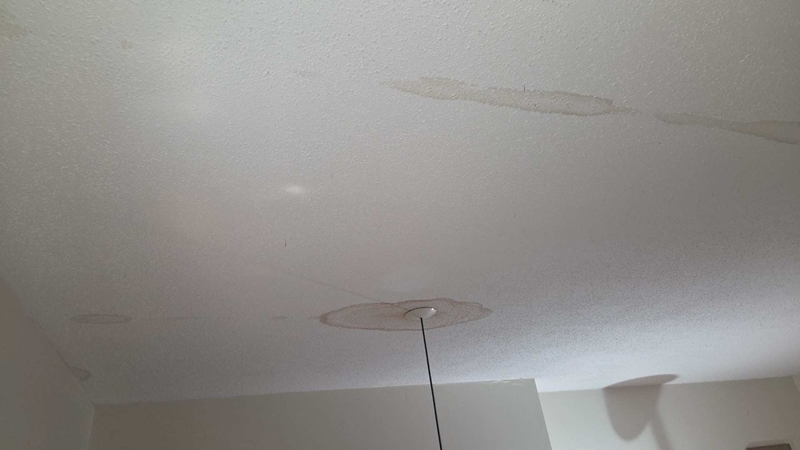
Water staining had spread across a finished ceiling. Thermal imaging helped compare temperature patterns, document the affected area, and narrow the next inspection step.
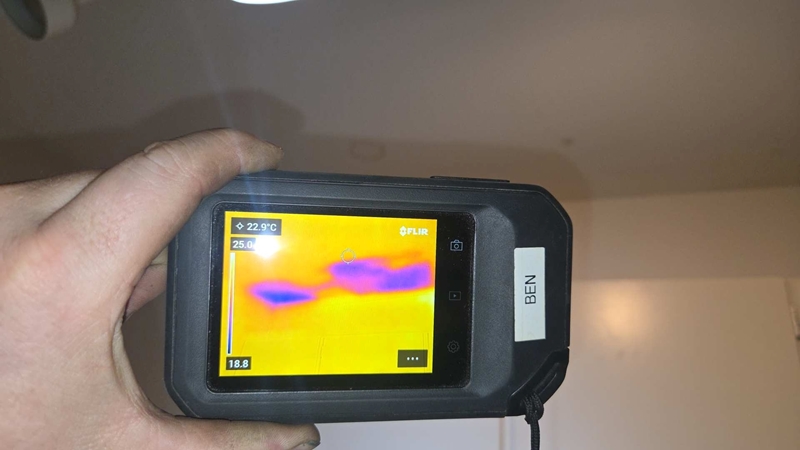
Water does not always appear directly below its source.
Water can travel along framing, piping, and finished surfaces before it becomes visible. Opening the ceiling at the first stain can create unnecessary damage without exposing the actual source.
Thermal imaging does not prove the cause by itself. It is a screening tool that becomes useful when its temperature patterns are compared with visible staining, plumbing routes, and conditions above the affected area.
A disciplined path from symptom to next step.
The objective is not to make the camera the answer. It is to use better evidence to choose the least destructive next inspection.
Document
Record the visible staining, affected rooms, and reported timing.Scan
Compare temperature patterns across the ceiling and nearby surfaces.Correlate
Relate the pattern to plumbing routes, fixtures, and conditions above.Target
Recommend direct inspection or repair where the combined evidence is strongest.Better information before opening finished surfaces.
The inspection produced a documented thermal pattern and a more focused area for follow-up. That gave the property team a clearer basis for the next decision.
Thermal imaging is most valuable when it reduces guesswork. Moisture meters, direct access, or further testing may still be needed to confirm the source.
Visible damage and site conditions documented
Thermal readings compared across the affected area
Follow-up inspection narrowed to a more defensible location
Start with the problem. We will help plan the next step.
See a few related decisions from the field.
These are selected for the same type of system, property, or service concern. The full library is available when you want to explore more.