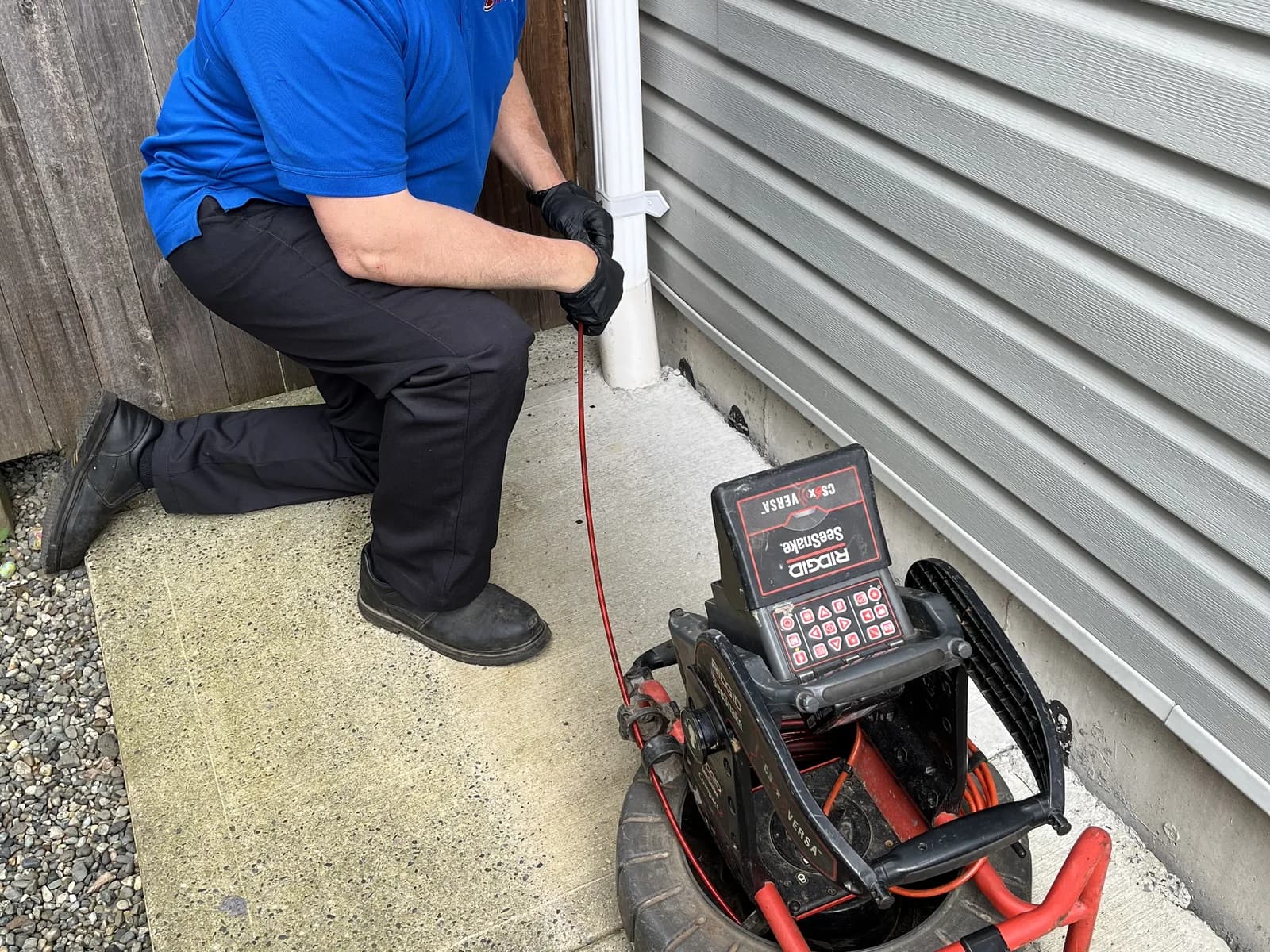
The affected fixtures and drainage pattern are checked first
Plumbing & mechanical service
Drain Cleaning & Diagnostics
You want the blockage gone, but you also want to know why it happened. We trace the symptom, choose the right clearing method, and explain what will reduce the chance of it returning.
Service areaMetro VancouverForHomes · Strata · Property managers
Field proof
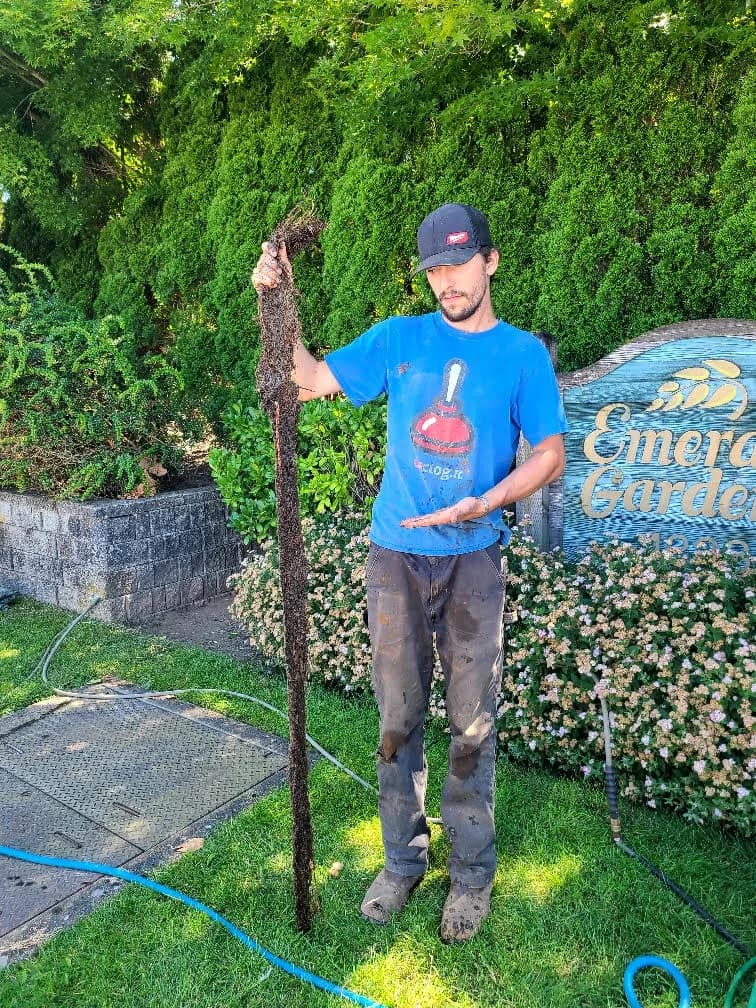
A recurring root blockage needs more than a temporary clearing.
Material removed from the line is useful evidence. It can help explain why the symptom returned and whether camera inspection, maintenance, or a defined repair should be considered next.
Read the documented field work →Start with the problem.
Leave with a clear next step.We assess before recommending work, explain the scope in plain language, and document what was done.What a good result feels like
Restore flow, understand the cause, and reduce the chance of paying for the same symptom again.
Clearing, camera inspection, and jetting are used only when appropriate
Recurring conditions are documented with a practical repair path
How the symptom changes the method
One slow sink and a building backup are not the same drain problem.
The useful first distinction is the pattern: which fixtures are affected, whether another fixture triggers it, whether the condition returns, and where water appears. That pattern determines whether clearing, camera work, or repair planning is worth considering.
One fixture only
A local trap, branch, fixture connection, or accessible obstruction may be the likely starting point. The aim is to restore flow without assuming the entire building drain is involved.
Several fixtures or suites
A shared branch, stack, building drain, or sewer condition becomes more likely. Access, resident impact, and a camera decision can become part of the scope.
The problem keeps returning
Roots, grease, scale, offsets, a damaged section, or an incomplete prior clearing can all create recurrence. Restored flow alone is not the full answer.
When this service may be needed
Start with what you are seeing.
Symptoms help establish urgency and the right investigation path. They do not, by themselves, confirm the failed component.
One fixture is slow, blocked, or holding water
More than one fixture is slow or backing up
The problem returns after previous clearing
Drains gurgle, smell, or change when another fixture is used
Water or sewage is appearing at a floor drain, cleanout, or lower level
Similar symptoms. Different causes.
The right fix depends on where the restriction starts.
A slow sink and a lower-level sewage backup are not the same job. We use the pattern of affected fixtures, access, and testing to narrow the problem before recommending added work.
Local obstruction
One sink, tub, shower, or toilet is affected while nearby fixtures work normally.
Shared drainage restriction
Several fixtures react together because they share a branch, stack, or building drain.
Main line condition
Roots, scale, grease, damage, or a low section can cause recurring or lower-level backups.
Rain and groundwater issue
Catch basins, perimeter drainage, sumps, and outlets can create symptoms that need a different response.
How the work moves forward
From reported symptom to defined next step.
- 01Establish which fixtures and levels are affected
- 02Inspect accessible drainage and test system behaviour
- 03Use clearing, camera inspection, or jetting where appropriate
- 04Confirm restored flow and record useful evidence
- 05Explain the likely cause, limitations, and repair options
What the service is for
A repair decision grounded in observed conditions.
The goal is not simply to make water disappear for today. We distinguish a local fixture blockage from a branch, stack, building drain, sewer, storm, perimeter, or sump-related issue.
What can change the scope
Access and hidden conditions matter.
A cleared line is not automatically a sound line. Grease, roots, scale, offsets, breaks, bellies, foreign objects, and inaccessible piping can require additional investigation or repair.
What affects the price
A drain call should not become an open-ended invoice.
We define the immediate service scope first. If the evidence supports camera work, jetting, access, or repair, we explain why and get approval before that added work begins.
Access
Fixture location, cleanouts, parking, building access, and occupied areas.
Pipe and blockage
Line size, length, material, condition, and the type and location of the restriction.
Method
The time and equipment needed for safe clearing, inspection, jetting, or testing.
Timing and follow-up
Urgency, after-hours response, recurring conditions, and any separately approved repair.
Your service record
Useful answers should remain useful after we leave.
Documentation is scaled to the work. Our goal is to give you a clear account of the condition, the approved work, the result, and any follow-up worth planning.
What we found
Observed conditions, relevant limitations, and the information used to define the work.
What was completed
The authorized work performed and relevant checks or testing completed on site.
What comes next
Outstanding conditions, monitoring notes, photos when useful, and recommended next actions.
Core service capabilities
Drain and sewer diagnostics
Recurring blockage investigation
Targeted drain clearing
Repair recommendations with a clear scope
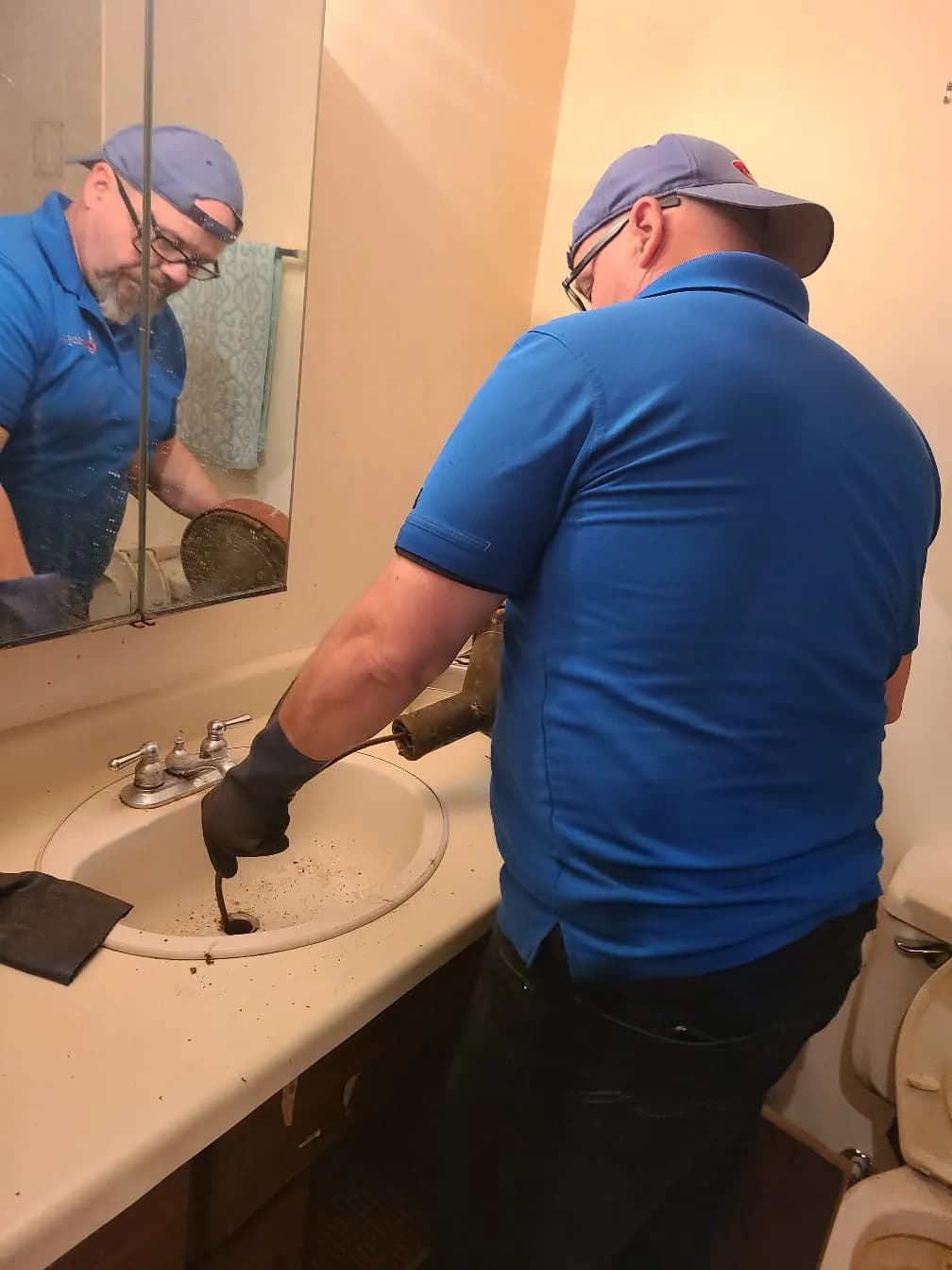
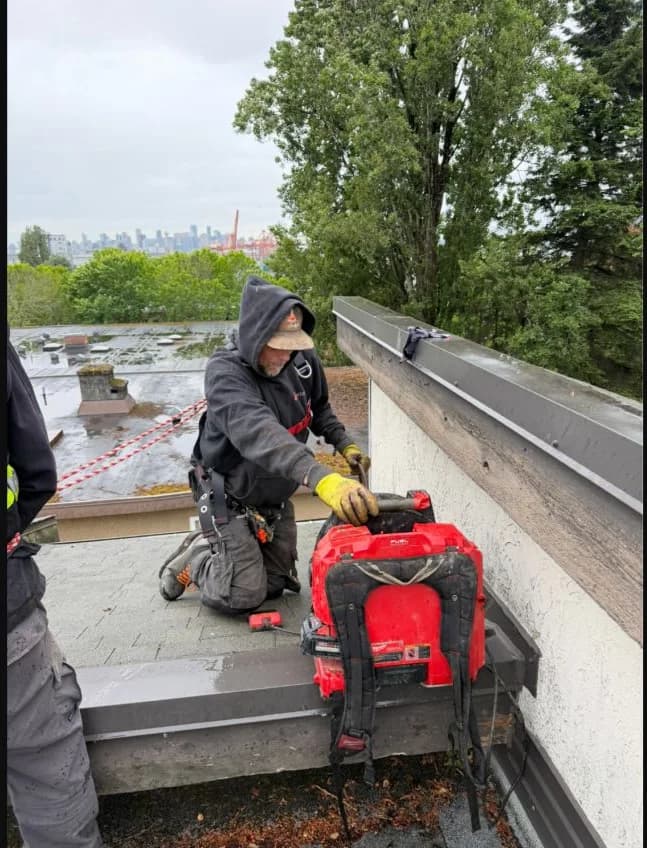
Real drainage work
Evidence from the field, not stock photography.
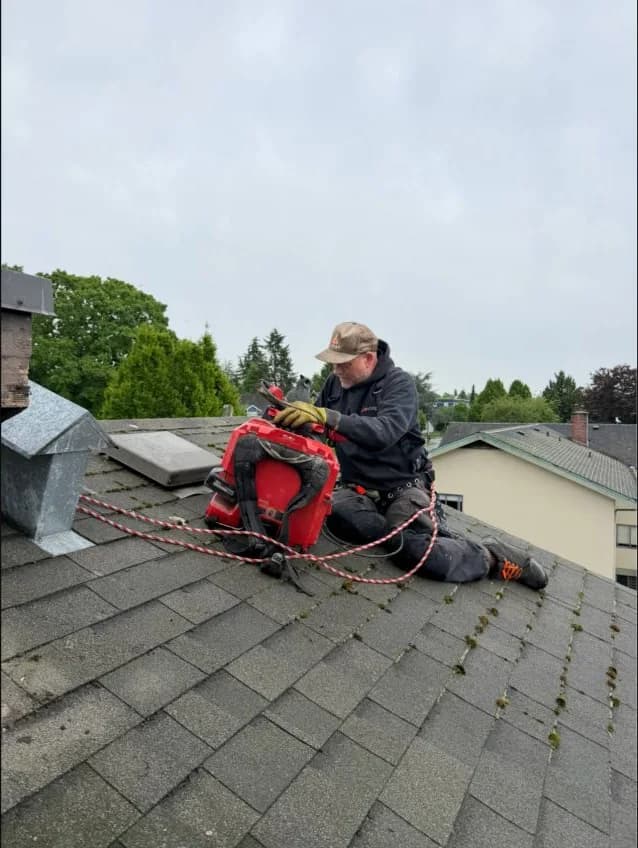
These images come from actual service work. They show why access, the obstruction itself, and the clearing method all matter.
From the field
See what good drain diagnostics look like.
Real service examples show how symptoms, access, clearing, evidence, and follow-up fit together.
Browse drainage field reportsMake the next decision easier
Drain snaking vs. hydro jetting
Choose a clearing method based on the pipe, access, condition, and recurring symptom.
Read the practical guideEvidence for the next decision
Useful proof, not generic promises.
These real field records and practical guides explain the evidence, access, and follow-up questions that shape this work.
FIELD REPORT
What good drain diagnostics look like
Real field examples showing the difference between cleared flow and a sound next decision.
Open →FIELD REPORTWhen a kitchen backup needs shared-drain access
A real multi-unit service record showing why a recurring fixture symptom can require parkade cleanout access, grease clearing, and a building-level closeout.
Open →DECISION GUIDEDrain snaking vs. hydro jetting
Understand why pipe condition, access, and recurrence pattern determine the method.
Open →Common questions
Useful answers before you call.
Do I need a camera inspection?+
Not every blockage does. It becomes more useful when problems recur, the affected section is unclear, or pipe condition will change the repair decision.
Is hydro jetting always better?+
No. The method should match the material, condition, access, and type of buildup. Fragile or damaged piping may require a different approach.
Why did the blockage return?+
Recurring symptoms often indicate that clearing removed the obstruction without resolving the condition that allowed it to form.
What affects the cost of drain service?+
Access, line size and length, blockage type, pipe condition, the equipment required, and whether added diagnostics or repair are approved all affect cost. We explain the immediate scope first and ask for approval before added work.
Should I keep using chemical drain cleaner?+
Repeated chemical use can create a safety risk and may damage some piping without fixing the cause. Stop adding products, keep the container or product name, and tell the technician what was used.
When is a blocked drain an emergency?+
Call right away when sewage is backing up, water is spreading, essential fixtures cannot be used, or the condition could damage the property. Do not wait for an online form while the condition is active.
Request service
Let’s assess the
problem properly.
Tell us what you are seeing. We’ll help you understand the right next step.
Start your request →Or call 604 496 1661