
Exterior drainage investigation
A recurring water condition needed a look below the surface.
A residential exterior drainage investigation moved from visible water concerns to controlled access, excavation, pipe-condition findings, and a documented closeout plan. Property details are protected.
Request service- Setting
- Residential exterior
- Reported condition
- Recurring water concern
- Finding
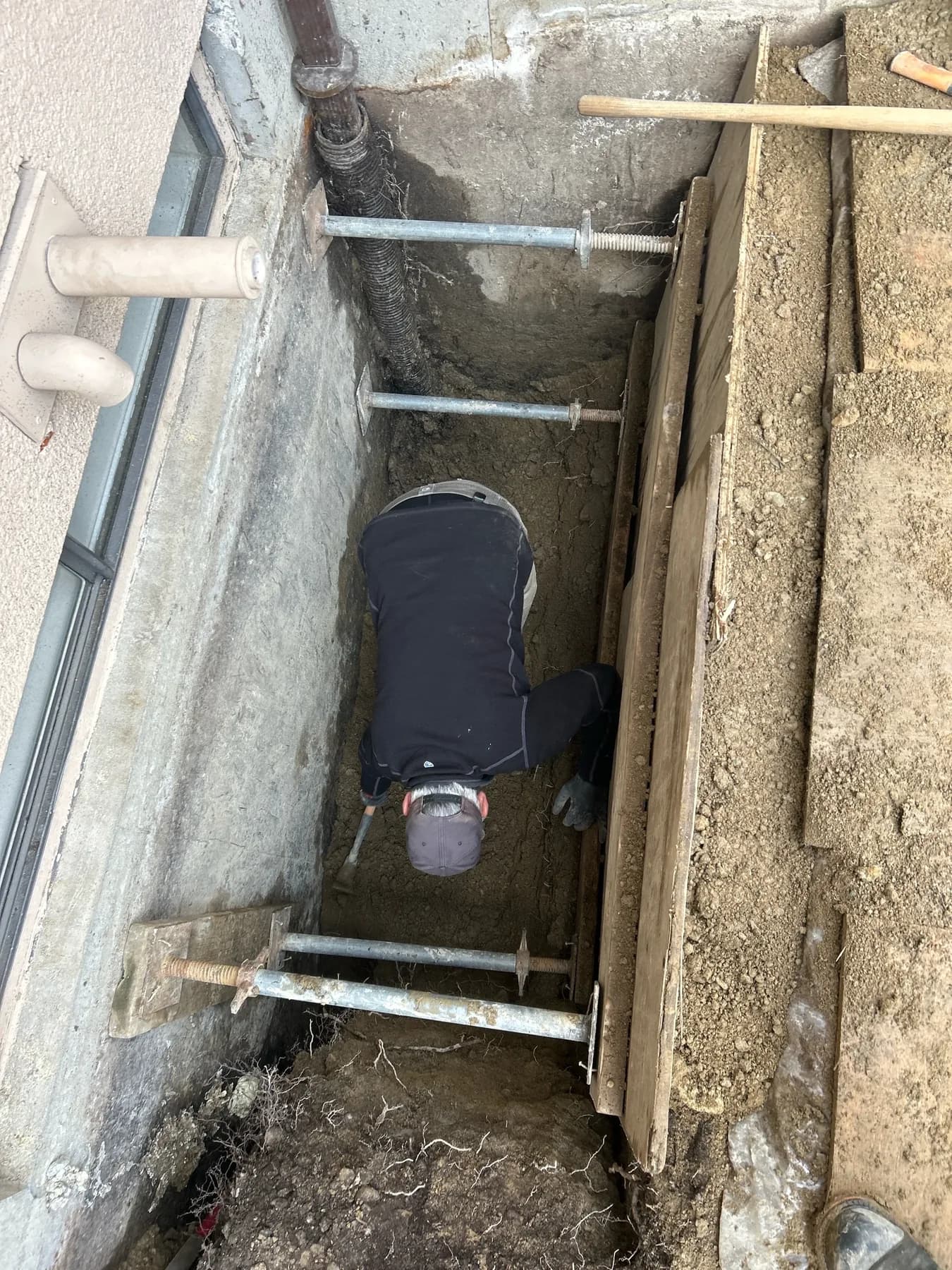
- Damaged perimeter-drain section
The investigation
Visible water was the starting point, not the diagnosis.
The work began by tracing the exterior drainage path and establishing safe access beside the building. Surface conditions alone could not confirm whether the problem was a sump, grading, groundwater, or a buried drainage restriction.
Excavation exposed a damaged section of perimeter drainage. The team documented the access work and the condition found before moving into repair and restoration planning. This field report focuses on the decision path rather than identifying the property.
Access and evidence
Real drainage work starts with controlled access and a clear look at the buried condition.

The field sequence
Control the work area, expose the condition, then define the repair and closeout.
- 01
Trace the likely water path
Start with where water appears, when it occurs, nearby inlets and sumps, and the accessible portions of the exterior drainage route.
- 02
Create safe access
Set up the work area and excavate carefully beside the building so the buried drainage can be assessed without treating surface symptoms as proof.
- 03
Confirm the buried condition
Inspect the exposed drainage section and distinguish a damaged pipe from other possible contributors such as grading, groundwater, or downstream capacity.
- 04
Document the next step
Record the condition found, the access work completed, repair scope, and the restoration or monitoring work still required.
Useful result
The site had a defined drainage condition and a clearer basis for repair planning.
The work moved the discussion beyond a recurring visible-water symptom. Controlled access made it possible to document the drainage condition and define a repair path grounded in what was actually found.
That distinction matters for owners and property managers: emergency stabilization, a buried-line repair, and site restoration each need to be planned and recorded as separate parts of the work.
- Exterior water path reviewed before treating the symptom as the cause
- Controlled excavation created access to the buried drainage route
- Damaged perimeter-drain condition documented for repair planning
- Closeout considerations separated from the immediate investigation
Need the same kind of help?
Start with the problem. We will help plan the next step.
Related field records
See a few related decisions from the field.
These are selected for the same type of system, property, or service concern. The full library is available when you want to explore more.
Discuss your project Explore storm-drain and flood response