
Recent storm-sump field record
A high-water alarm needed stabilization before the failure could be defined.
At a multi-unit property, the storm-sump alarm was active and the water level had to be reduced before the installed pumps could be removed and inspected. The field record separated an impeller obstruction from the electrical condition that still prevented a normal restart.
Request service- Property
- Multi-unit residential
- Reported condition
- Active high-water alarm
- Mechanical finding
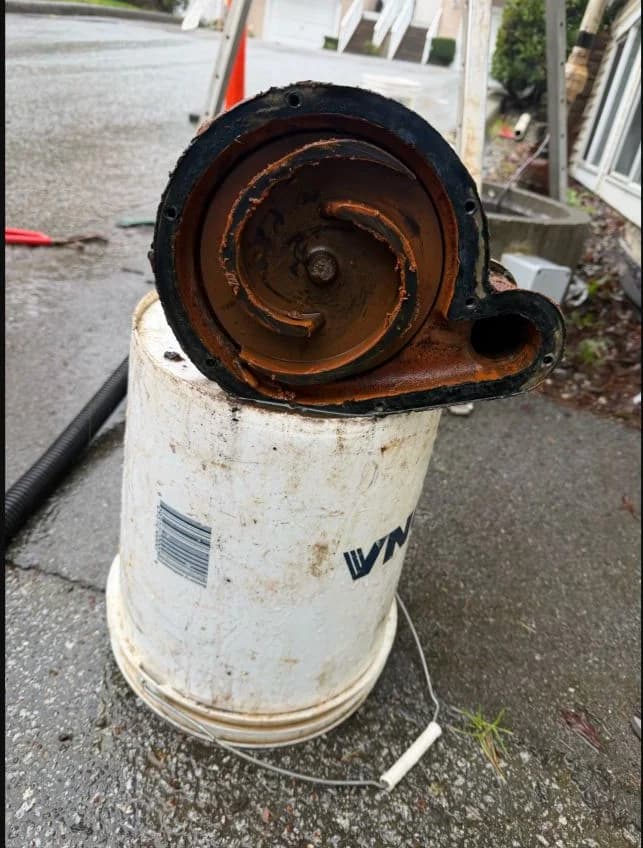
- Rock obstruction in both impellers
- Temporary control
- Float-controlled temporary pump
The decision point
Removing the obstruction answered only part of the problem.
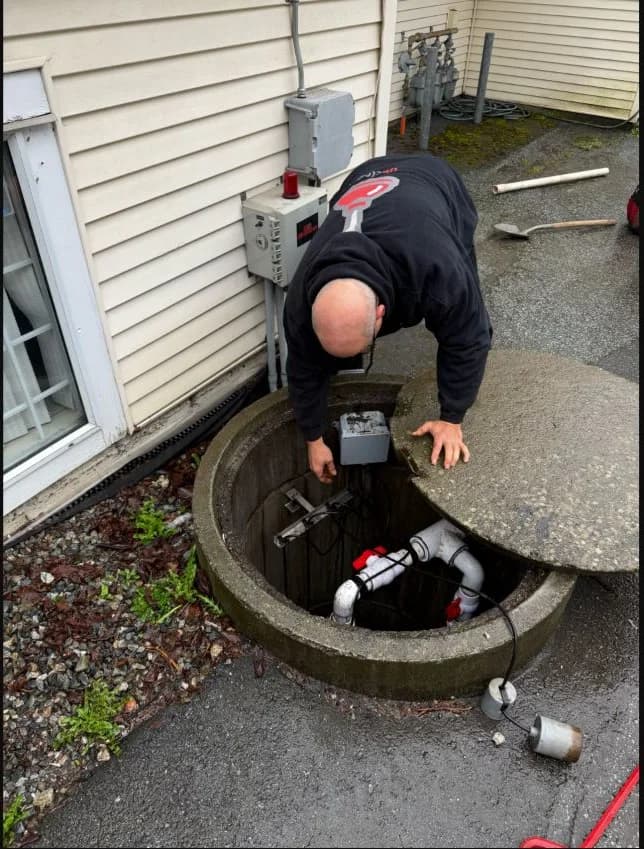
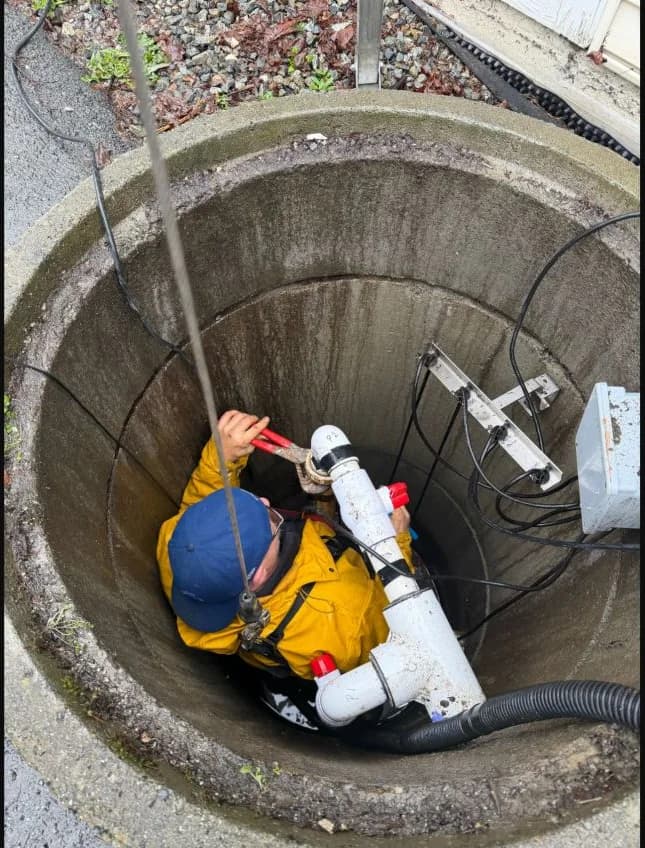
The crew first added temporary pumping to lower the water level. Once the condition was stable enough to work, both installed pumps were removed and rocks were found lodged in the impellers.
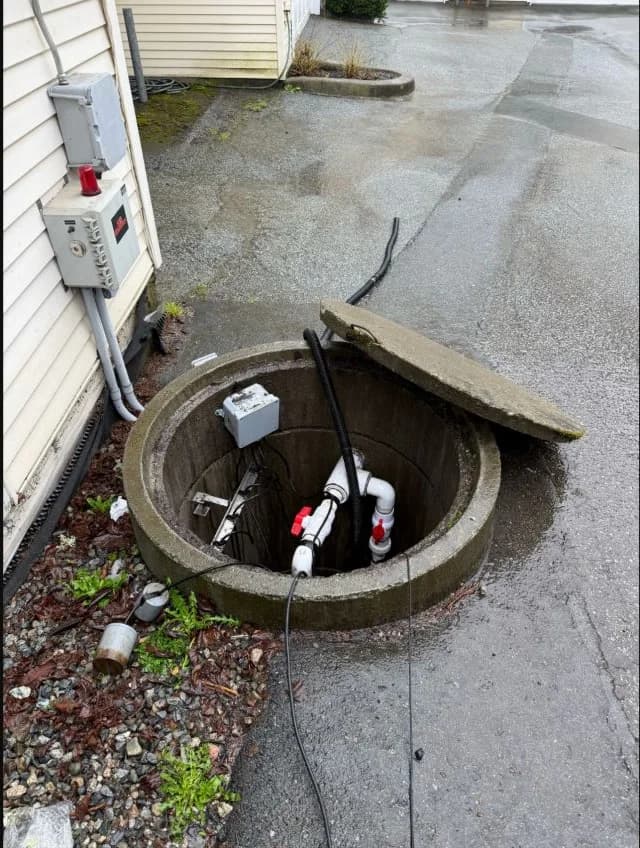
After the pumps were reinstalled, they still would not operate normally. Follow-up electrical checks identified high current and a supply-side concern. A temporary float-controlled pump remained in place while the permanent pump and electrical scope was defined.
Property details are generalized. The record is published to show the diagnostic sequence without identifying residents or the building.
Field evidence
Access, obstruction, temporary control, and follow-up testing were documented.
Response sequence
Stabilize the water level, inspect the pumps, and test the complete system.
- 01
Control the water level
Temporary pumping reduced the immediate high-water condition and created a safer path to inspection.
- 02
Remove and inspect
Both pumps were lifted so the impellers and mechanical condition could be checked directly.
- 03
Test after reinstallation
The pumps were reinstalled and tested, revealing that the obstruction was not the only fault affecting operation.
- 04
Maintain temporary protection
A float-controlled temporary pump supported the property while pump and electrical recommendations were prepared.
The useful outcome
The property received a controlled temporary measure and a better-defined permanent decision.
The response did not treat the active alarm as proof of a single failed component. It documented the obstruction, the restart problem, and the electrical findings separately.
- High water reduced before pump removal
- Rock obstruction confirmed at both impellers
- Restart and electrical concerns recorded
- Temporary float-controlled pumping established
Need the same kind of help?
Start with the problem. We will help plan the next step.
Related field records
See a few related decisions from the field.
These are selected for the same type of system, property, or service concern. The full library is available when you want to explore more.
Discuss your project Explore storm and flood response